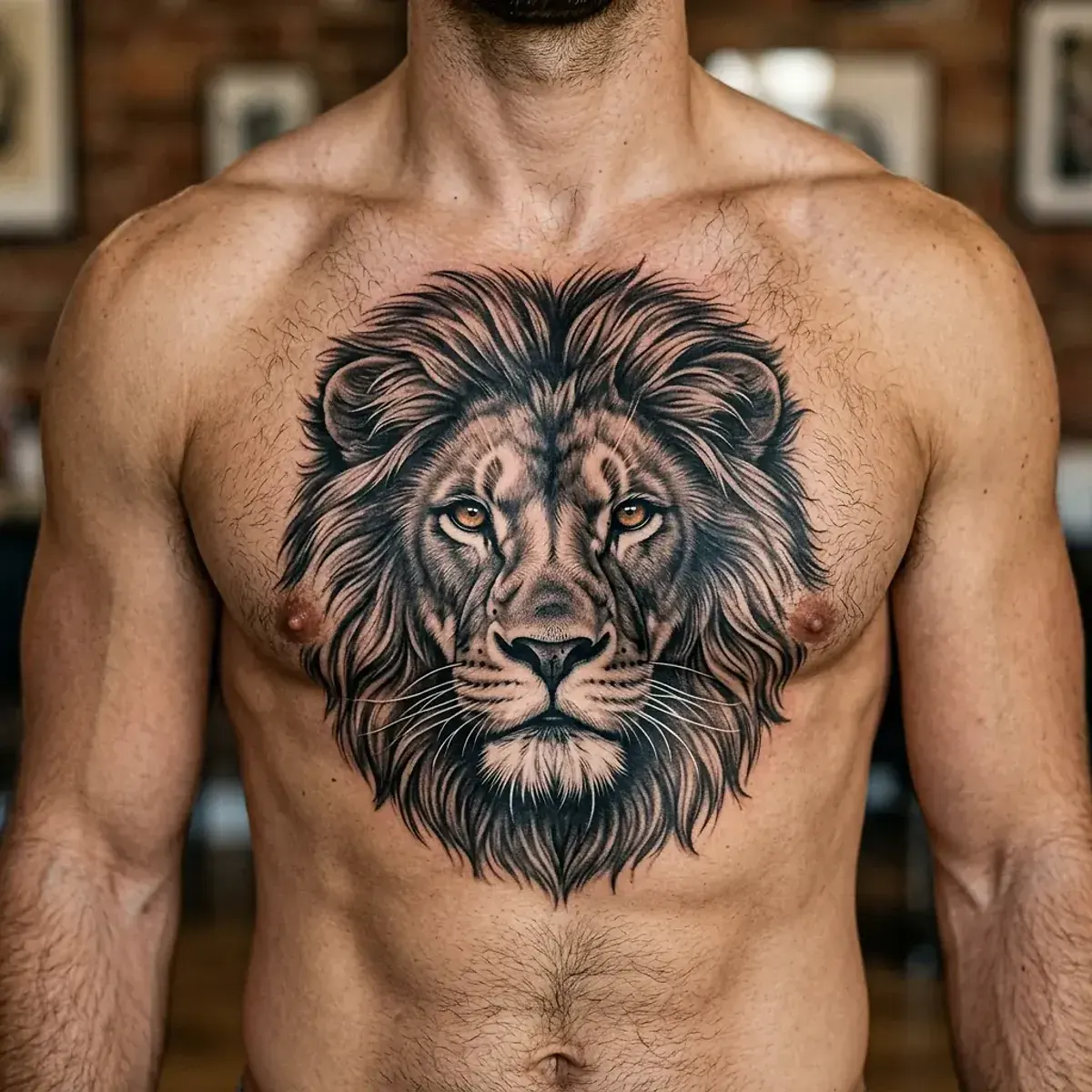
Lion Tattoo Meaning
The lion tattoo stands as one of the most powerful symbols a person can choose to carry on their body. It speaks in the universal language of strength, courage, and authority — qualities revered across every human civilization that ever encountered this magnificent animal.
A lion tattoo declares something fundamental about how its wearer sees themselves or aspires to be: brave in the face of adversity, protective of those they love, and willing to stand their ground. The lion does not hesitate; it acts with conviction. This decisiveness and natural confidence is central to the symbol’s enduring appeal.
The lion’s mane adds another layer of meaning. A full, flowing mane is a signal of vitality, dominance, and maturity. In nature, lions with the most impressive manes attract the most mates and command the most respect. A tattooed mane rendered in elaborate detail becomes a visual statement of earned authority and natural majesty.
The lion also symbolizes family and protection. Lions are the only truly social big cats, living in family groups called prides. A lion watching over its pride is a powerful metaphor for parenthood, loyalty, and the fierce love that motivates us to protect others at any cost.
Origins and History of the Lion Symbol
The lion has been a central symbol in human culture for at least 40,000 years. The Lion-Man of the Hohlenstein-Stadel — a carved ivory figurine discovered in Germany dating to approximately 40,000 BCE — is one of humanity’s oldest known artworks and depicts a human body with a lion’s head. This extraordinary object suggests that the lion-human connection predates recorded history by tens of thousands of years.
In ancient Mesopotamia, lions represented the might of kings. The Ishtar Gate of Babylon was adorned with striding lion reliefs. The Assyrian lamassu — winged bulls and lions with human faces — guarded palace gates as divine protectors.
In ancient Egypt, the sphinx combined the human head with a lion’s body, embodying divine wisdom and royal power. The goddess Sekhmet had the head of a lion and represented both destruction and healing.
In ancient Greece and Rome, lions were symbols of both divine wrath and heroic courage. Hercules’ first labor was to slay the Nemean Lion, and the hero thereafter wore its impenetrable hide as armor — donning the symbol of the thing he had overcome.
The Lion in Different Cultures
In Christian symbolism, the lion represents both Christ himself (the “Lion of Judah” from the Book of Revelation) and Saint Mark, whose gospel is associated with the lion’s power and directness. Medieval church facades and heraldry are thick with lion imagery as symbols of divine authority.
In African cultures, particularly among the Maasai of East Africa, killing a lion was historically a rite of passage for young warriors. The lion represented not just danger to be overcome but a quality to be absorbed — the hunter taking on the courage of what he conquered.
In Asian traditions, the snow lion of Tibetan Buddhism represents fearlessness and a clear mind. The Chinese guardian lion (shishi), often called a “foo dog,” protects buildings and symbolizes peace and prosperity. In India, the lion throne (simhasana) is the seat of deities and kings alike.
In heraldry, the lion is the most common animal in European coats of arms. The three golden lions of England, the rampant lion of Scotland, and countless noble family crests all draw on the lion’s associations with royalty, courage, and honor.
Lion Tattoo Styles
Realism is the dominant style for lion tattoos, particularly for the face and mane. A skilled realism artist can render each strand of the mane, every line of the face, and the depth of the lion’s golden eyes with stunning precision. Black and grey realism creates a dramatic, cinematic look, while color realism adds warmth and vitality.
Neo-traditional lion tattoos use bold outlines, rich colors, and decorative elements like flowers or geometric backgrounds to create designs with both modern flair and classic tattoo energy.
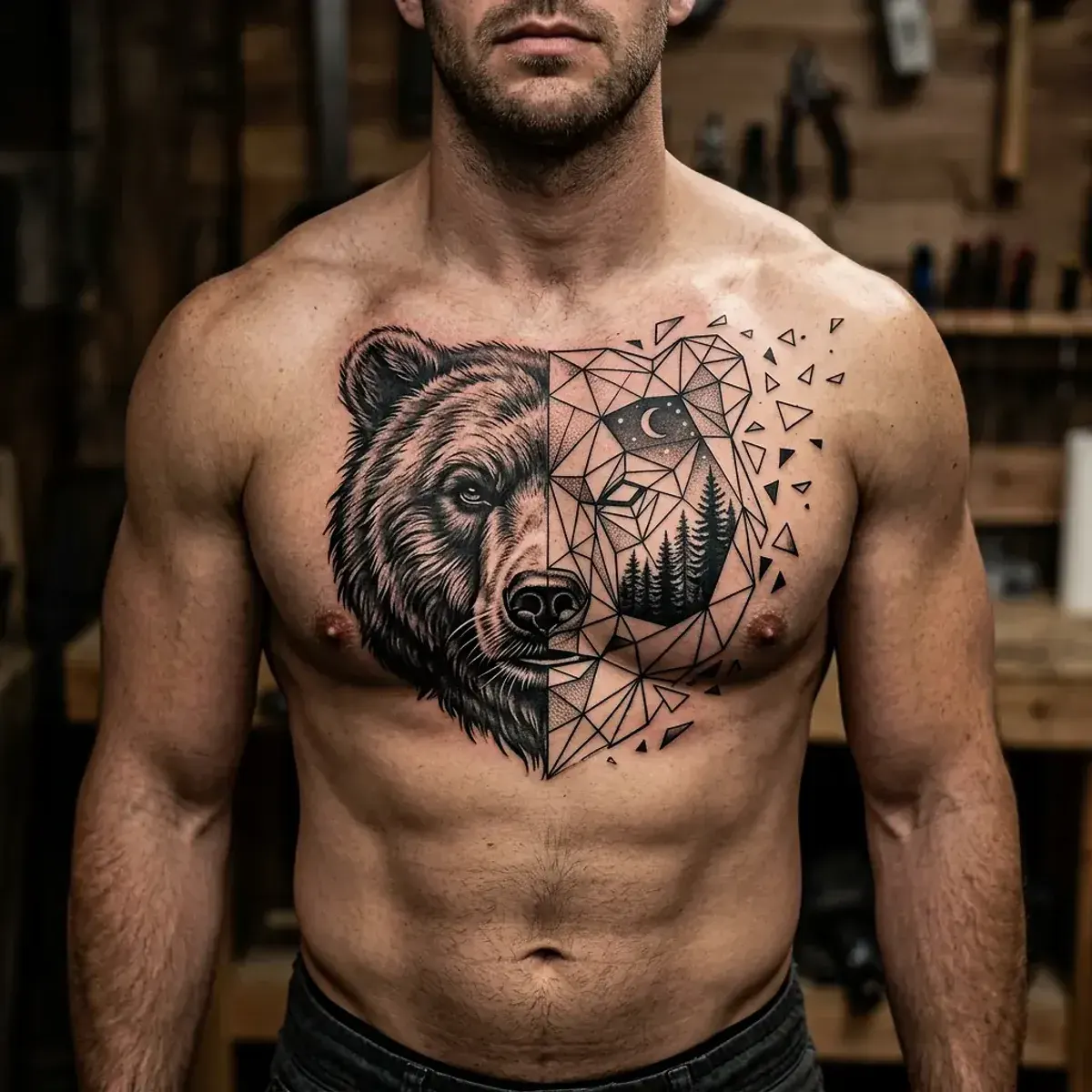
Geometric lion tattoos are highly popular in contemporary tattooing, breaking the animal’s form into polygons, lines, and sacred geometry patterns. Half-geometric, half-realistic lions — where one side shows the animal and the other its geometric equivalent — are particularly striking.
Minimalist linework lion faces have become increasingly popular for those who want the symbol’s power without heavy detail. A simple single-line or fine-line lion silhouette carries the meaning with elegant restraint.
Mandala lion tattoos incorporate the lion face into a mandala design, surrounding it with intricate geometric and floral patterns for a deeply spiritual aesthetic.
Popular Placements
The chest is the most iconic placement for a lion face tattoo. Centered over the sternum or placed on one side of the chest, a lion looking directly outward creates a powerfully confrontational design that connects the symbol directly to the heart.
The upper arm and sleeve provide ample space for detailed lion compositions, often incorporating additional elements like landscapes, geometric backgrounds, or floral accents.
The back allows for the most ambitious lion tattoos — a full back piece featuring a lion in profile against a sunset or savanna background is one of tattooing’s most majestic possibilities.
The thigh suits large, detailed designs in a relatively private placement.
Combinations and Associations
A crown is the lion’s most natural partner, reinforcing the royal symbolism that both images share. A crowned lion is the heraldic symbol of countless kingdoms and a timeless tattoo combination.
Pairing a lion with a tiger creates a powerful composition of two apex predators, often used to represent duality — Eastern and Western strength, yin and yang.
A lion combined with geometric patterns or a mandala creates a spiritually charged design where wild power meets cosmic order.
The eagle and lion together represent the ancient heraldic pairing of the king of the land and the king of the sky — a comprehensive statement of dominance and freedom.