Meaning of the Elephant Tattoo
The elephant tattoo celebrates the largest land animal on Earth, a universal symbol of wisdom, memory, and quiet strength. A creature of remarkable intelligence and sensitivity, the elephant embodies the values of family, loyalty, and patience.
The elephant symbolizes wisdom and memory. The expression “memory of an elephant” exists for good reason: elephants remember routes, faces, and events across decades. Getting an elephant tattoo celebrates the importance of knowledge, experience, and the lessons of the past.
The strength of the elephant is imposing, but it is a calm and measured force. The elephant is not aggressive by nature: it embodies gentle power, the ability to be strong without being violent. This tattoo speaks to those who cultivate a serene inner strength.
The elephant is a profoundly family-oriented animal. Herds are led by the eldest matriarch, and members care for one another throughout their lives. The elephant symbolizes family bonds, loyalty, and the importance of looking after those we love.
The longevity of the elephant (60 to 70 years in the wild) makes it a symbol of a long and prosperous life. Its slow, steady gait represents patience and perseverance in the face of obstacles.
Origins and History
In India, the elephant is sacred. Ganesh, the elephant-headed god, is one of the most revered deities in Hinduism. Ganesh is the god of wisdom, knowledge, and new beginnings. He removes obstacles and opens the way to success for those who seek his blessing.
Airavata, the white elephant with multiple tusks, is the mount of Indra, king of the gods in Hindu mythology. The white elephant is a symbol of purity, royalty, and divine power.
In Buddhism, Queen Maya dreamed of a white elephant entering her side before giving birth to Siddhartha Gautama (the Buddha). The white elephant symbolizes supreme wisdom, mental purity, and spiritual royalty.
In Africa, the elephant is revered as a symbol of strength, wisdom, and leadership. In many African traditions, the elephant is associated with ancestors and the collective memory of the people.
In Thailand, the elephant is the national animal and a symbol of the monarchy. The royal white elephant (chang phueak) is considered sacred and is believed to bring extraordinary good fortune.
Popular Styles
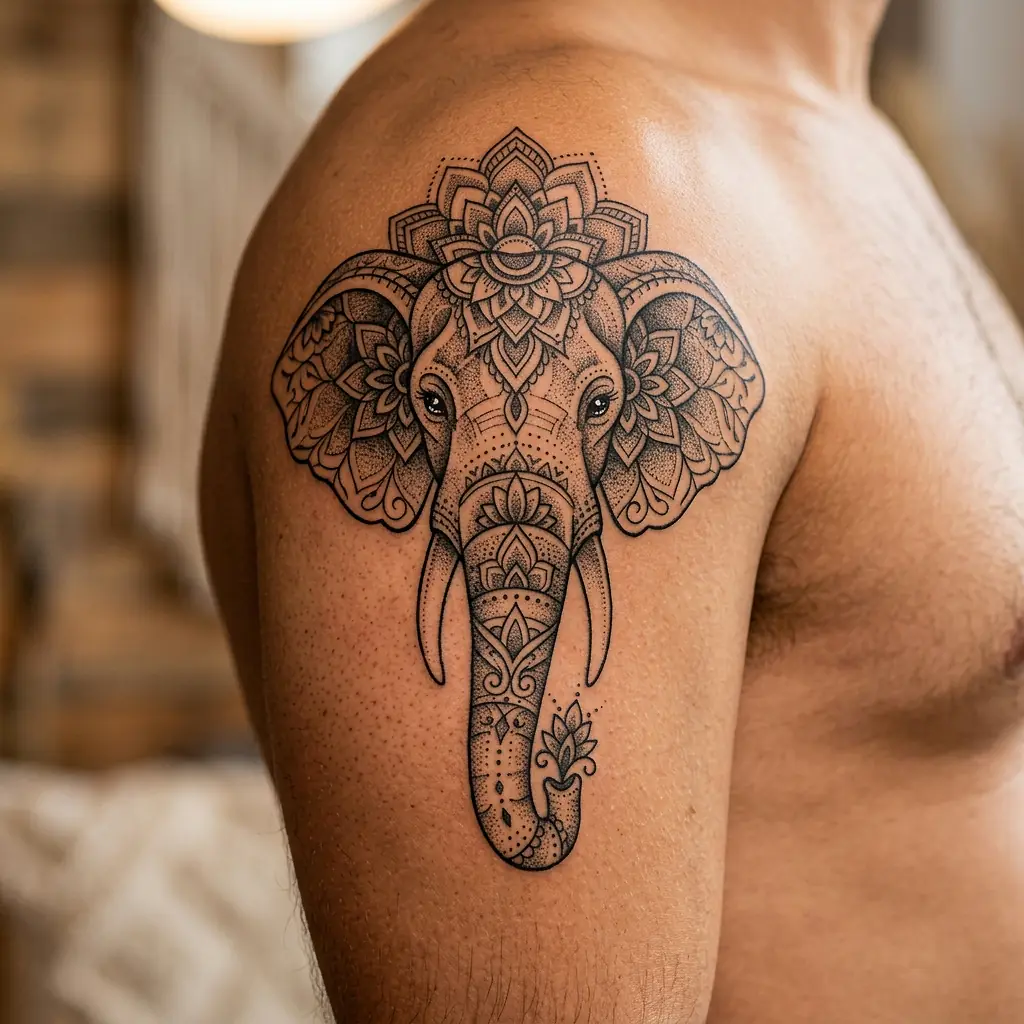
Mandala integrated into the elephant’s silhouette is one of the most popular designs in contemporary tattooing. Sacred geometric patterns fill the body of the animal, creating a fusion of animal strength and spiritual geometry.
Realism captures the wrinkled texture of the skin, the depth of the gaze, and the majesty of the elephant’s posture. Black and grey realism is particularly effective for this subject.
Indian ornamental style decorates the elephant with mehndi (henna) patterns, jewels, and ceremonial coverings, like a parade elephant during a festival. The result is rich, detailed, and spectacular.
Geometric and dotwork create modern, structured elephants with clean lines. Watercolor brings vivid, expressive colors. Minimalist fine-line work offers a streamlined elephant in just a few elegant strokes.
Recommended Placements
The forearm is the most popular placement for an elephant, accommodating a front-facing or profile portrait. The arm (bicep) suits a medium-sized mandala elephant.
The thigh and back allow for detailed compositions with a full elephant in motion. The shoulder blade is ideal for an ornamental elephant head.
The wrist and ankle accommodate a small minimalist elephant. The sternum allows for a symmetrical front-facing elephant. The calf is perfect for a vertical elephant design.
Combinations and Associations
An elephant with a lotus is a combination charged with spirituality, symbolizing wisdom and purity. An elephant carrying a lotus on its trunk is a classic motif from Hindu iconography.
A mandala filling the elephant’s silhouette is the most requested combination, fusing animal strength with sacred geometry in a single powerful design.
A family of elephants (mother and calf, or a line of elephants in decreasing size) symbolizes family bonds and the transmission of wisdom between generations. African tribal patterns or Indian ornaments enrich the design and anchor the motif in its cultural origins.