Meaning of the Watercolor Tattoo
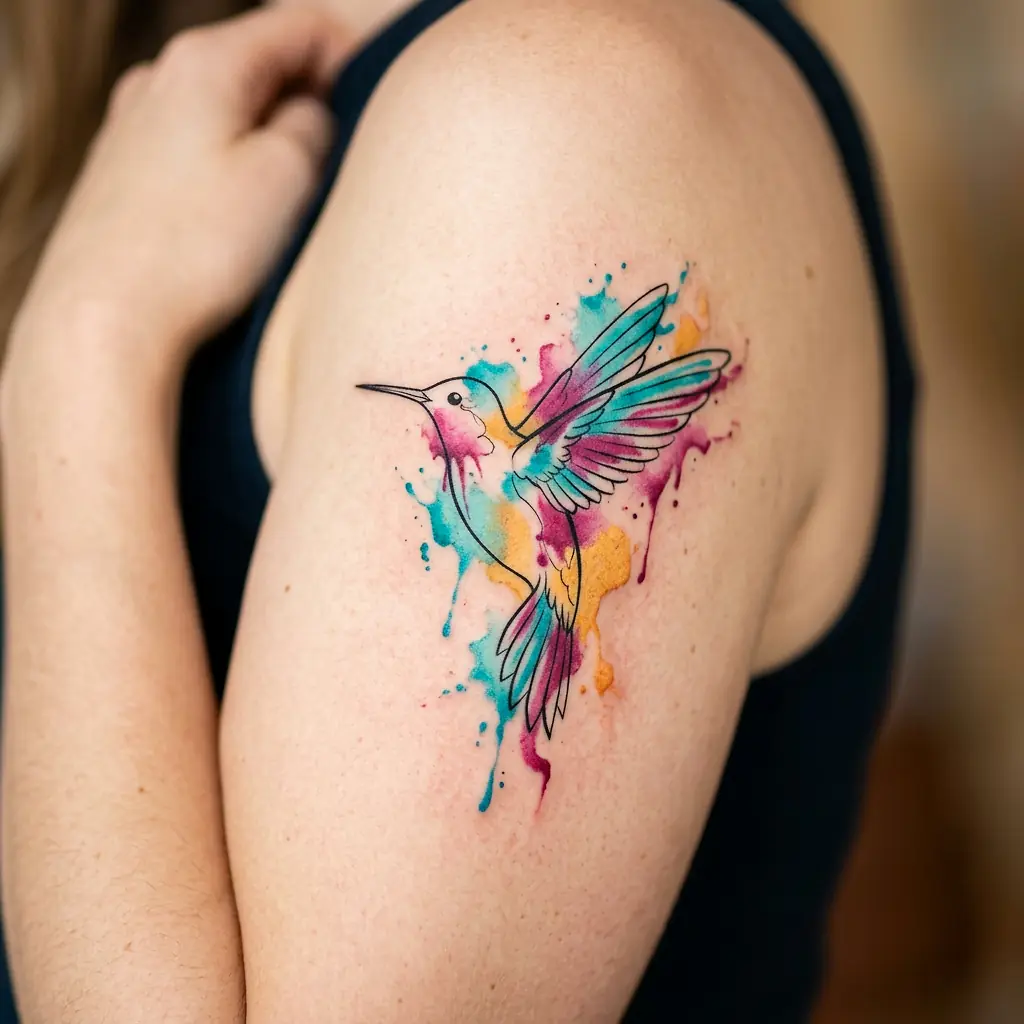
The watercolor tattoo transposes onto skin the lightness, spontaneity and brilliance of water-based painting. With its translucent colors, deliberate drips and controlled splashes, this style creates the illusion that an artist’s canvas has been painted directly onto the body. It is one of the most visually striking tattoo styles of the contemporary era.
The watercolor style carries a strong symbolism of creative freedom and ephemeral beauty. Watercolor, a medium by nature unpredictable and difficult to master, evokes acceptance of imperfection and the ability to find grace in spontaneous gesture.
The drips and splashes that characterize this style remind us that beauty also arises from controlled accident, free gesture and surrender to creative flow. It is a style that resonates with Eastern philosophies of wabi-sabi (beauty of the imperfect) and mastered letting-go.
Watercolor tattooing transforms any subject into a vibrant, emotional work. A lotus in watercolor gains a dreamlike dimension. A bird in flight, enhanced with color splashes, captures the very sensation of movement and freedom.
Colors themselves carry meaning: blues and purples evoke dreams and spirituality, reds and oranges energy and passion, greens and turquoises nature and renewal, pinks softness and femininity.
Origins and History
Watercolor tattooing is a relatively recent style, appearing in the early 2010s. It was born from tattoo artists’ desire to push the traditional boundaries of the medium by drawing direct inspiration from painting on paper.
Pioneers of the style, like Amanda Wachob (United States) and Ondrash (Czech Republic), demonstrated that it was possible to reproduce on skin the transparency, dilution and blending effects specific to watercolor. Their work paved the way for a new generation of artists.
The style experienced an explosion in popularity between 2013 and 2018, driven by social media. Watercolor tattoos, visually spectacular and photogenic, were massively shared on Instagram and Pinterest, attracting a new audience to tattooing.
A technical debate has accompanied this style since its beginnings. Traditionalists point out that diluted colors and absence of black outlines accelerate tattoo aging. Contemporary artists respond by integrating subtle black structures beneath the watercolor tones, combining fluid aesthetics with longevity.
Variations Within the Style
Pure watercolor eliminates all black outlines and relies solely on transitions of diluted color. It is the form most faithful to traditional painting, but also the most demanding in terms of longevity.
Structured watercolor combines a black line drawing (fine line or light blackwork) with watercolor color enhancements. The black line anchors the design and ensures readability over time, while colors add life and movement.
Abstract watercolor abandons figurative subjects to create color explosions, fluid forms and purely aesthetic compositions. It is the form closest to contemporary abstract art.
Splatter art emphasizes splashes, drips and color projections. The “fresh paint” effect gives the impression the tattoo was just painted moments ago.
Recommended Placements
The forearm and upper arm are the most popular placements as they offer a flat, visible surface that showcases vibrant colors. The half sleeve suits medium compositions perfectly.
The shoulder blade and upper back accommodate larger compositions integrating a main subject (bird, flower) and its surrounding splashes. The thigh offers a large surface for detailed pieces.
The calf and ribs suit vertical compositions. The sternum accommodates symmetrical designs with colors descending toward the ribs.
Combinations and Associations
Flowers are the most natural subjects for watercolor: roses, peonies, poppies and lotuses gain a living, vibrant dimension through translucent colors and dilution effects.
Animals (birds, butterflies, fish, hummingbirds) rendered in watercolor capture movement and grace with a fluidity that other styles cannot achieve. Color splashes around the main subject create a striking visual dynamic.
The combination with geometric elements (triangles, circles, straight lines) creates a fascinating contrast between mathematical precision and the fluid freedom of watercolor. This marriage of order and chaos is one of the most successful combinations in contemporary tattooing.