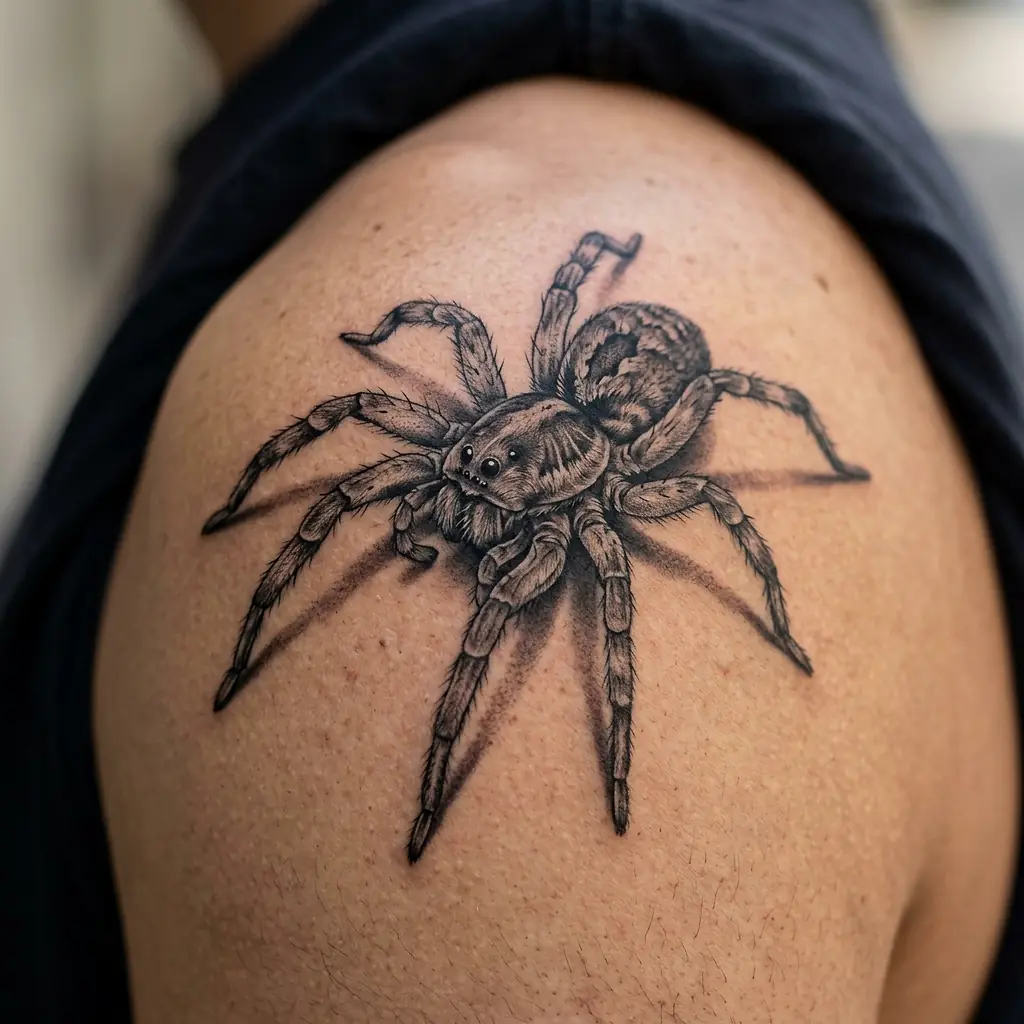
Meaning of the Spider Tattoo
The spider tattoo is a fascinating motif that oscillates between fear and admiration. A patient weaver and architect of the natural world, the spider symbolizes creativity, destiny, and the power to construct your own life, thread by thread.
The spider is fundamentally a creator. Its web, a masterpiece of natural engineering, represents the ability to shape your own world. Getting a spider tattoo affirms your creative power and self-reliance.
Patience is a central quality of the spider. It weaves its web methodically, waits without moving, then strikes with remarkable precision. This tattoo suits those who understand that the greatest achievements require time and careful planning.
The spider also symbolizes fate and the weaving of life. In many mythologies, spider deities weave the threads of mortal destiny. The web represents the invisible connections between events, choices, and their consequences.
The darker side of the spider, a silent predator, evokes cunning, manipulation, and the danger hidden behind beauty. This ambiguity makes the spider tattoo remarkably rich in interpretations.
Origins and History
Among Native Americans, Spider Woman is a major creator deity. In Navajo tradition, she taught humans the art of weaving. In Hopi mythology, she is Kokyangwuti, the creator of life itself who shaped the world and all its creatures.
In West African folklore, Anansi the spider is a central character in Akan mythology. Clever and resourceful, Anansi uses his wit to triumph over creatures far stronger than himself. His stories traveled to the Caribbean with the African diaspora, where they continue to be told today.
In Greek mythology, Arachne was a mortal weaver so talented that she dared challenge the goddess Athena. After their confrontation, Athena transformed her into a spider, condemned to weave for all eternity. This myth gives its name to the class Arachnida.
In Japanese tradition, the Jorogumo is a spider spirit that takes the form of a beautiful woman to seduce its prey. This creature illustrates the theme of deceptive beauty and hidden danger that runs through many cultures.
In Celtic tradition, the spider was associated with fate and the goddess Brigid. In a famous Scottish legend, Robert the Bruce watched a spider rebuild its web again and again after it was destroyed, which gave him the courage to resume his fight for Scottish independence.
Popular Styles
3D realism is spectacular for a spider tattoo, creating the illusion that it is crawling across the skin. Shadows and anatomical details produce a strikingly lifelike effect.
Blackwork offers powerful graphic silhouettes. A black spider against a geometric web creates a strong visual contrast that works well at any size.
Old school (American traditional) remains a classic, with the elbow spider web being an iconic motif in tattoo history. Neo-traditional modernizes this design with rich colors and ornamental details.
Dotwork creates delicate, hypnotic spider webs built point by point. The Japanese style integrates the spider into compositions with flowers and traditional motifs for a culturally rich design.
Recommended Placements
The neck and back of the hand are bold placements for a spider, visible and assertive. Behind the ear, a small spider creates an element of surprise.
The elbow is the historic placement for a spider web, a classic of traditional tattooing culture. The shoulder and shoulder blade accommodate a spider with its complete web.
The sternum allows for a symmetrical spider with web threads extending across the chest. The thigh offers space for complex compositions integrating a web and surrounding environment.
Combinations and Associations
A spider on its web is the most natural combination, symbolizing creation and mastery of one’s environment. Dewdrops on the threads add a touch of fragile beauty to the design.
With a skull, the spider reinforces symbolism of mortality and the passage between worlds. A spider suspended before a moon creates a timeless nocturnal and mystical composition.
Flowers trapped in a web explore the contrast between beauty and trap, fragility and strength. An hourglass within the web recalls the body of the black widow and symbolizes the flow of time.