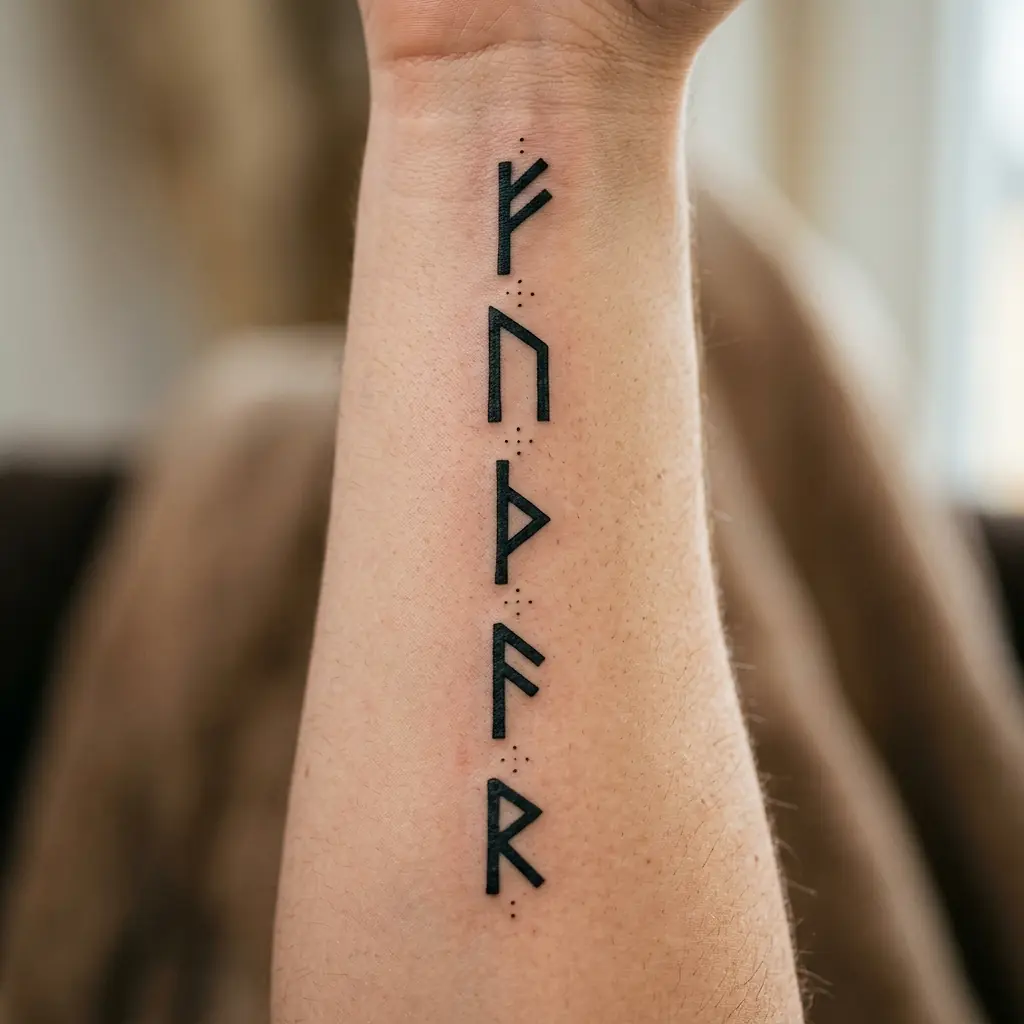
Meaning of the Rune Tattoo
The rune tattoo inscribes on the skin an ancient alphabet charged with mystical power, wisdom and protection. Each runic character is far more than a simple letter: it is an autonomous symbol carrying cosmic significance, inherited from the Germanic and Scandinavian peoples.
The oldest runic alphabet, the Elder Futhark, comprises 24 runes divided into three groups of eight (aettir). Each rune bears a name, a sound and a profound symbolic meaning.
Fehu (F) represents wealth, abundance and material prosperity. Uruz (U) embodies raw strength, vitality and health. Thurisaz (Th) symbolizes protection through force, active defense against threats.
Ansuz (A) is Odin’s rune, representing wisdom, communication and divine inspiration. Raidho (R) evokes travel, both physical and spiritual, and one’s life path. Kenaz (K) symbolizes knowledge, creativity and the inner flame.
Algiz (Z) is one of the most commonly tattooed runes. Its shape, evoking a person raising their arms toward the sky, represents divine protection and the connection between human and sacred.
Tiwaz (T), shaped like an upward-pointing arrow, is the rune of the god Tyr. It symbolizes courage, justice and honorable sacrifice. Warriors carved it on their weapons before battle.
Sowilo (S) represents the sun, victory and life force. Wunjo (W) embodies joy, harmony and the fulfillment of wishes.
Origins and History
Runes originated from Italic alphabets of the 1st century, adapted by Germanic peoples. According to Norse mythology, Odin discovered the runes after hanging nine days and nine nights from the tree Yggdrasil, sacrificing an eye to acquire this cosmic wisdom.
The Elder Futhark (24 runes) was used from the 2nd to the 8th century throughout Scandinavia and Germanic territories. It was gradually replaced by the Younger Futhark (16 runes) during the Viking age.
Runes were not merely a writing system. They served for divination (consulting runes drawn at random), magic (carving runes on objects to confer power) and commemoration (runestones recounting the deeds of the dead).
Bind runes combined multiple runes into a single symbol to concentrate their powers. This practice is the origin of many contemporary tattoo designs that overlay runes to create personalized talismans.
Popular Styles
Minimalist blackwork is the most widespread style for runic tattoos. Clean, precise black lines reproduce the angular appearance of runes carved into wood or stone. This style highlights the geometric purity of each character.
Dotwork surrounds runes with an aura of dots that evokes the mystical, ritual dimension of these symbols. Point gradients create a radiating effect around the central character.
Engraving style reproduces the texture of stone or wood, creating the impression that the rune is carved directly into the skin. This realistic style reinforces the connection to historical runestones.
Geometric style integrates runes into broader compositions, combining ancestral symbolism with contemporary aesthetics.
Recommended Placements
The wrist and forearm are the most popular placements for a single rune or short runic sequence. The back of the hand suits a visible yet discreet symbol.
The nape perfectly accommodates a protective rune like Algiz. Along the spine, a series of runes forms a powerful vertical talisman.
Fingers and the side of the hand are trending placements for minimalist runes. The inner arm offers an intimate space for personal runes.
Combinations and Associations
Runes combine naturally with the Viking universe. Surrounded by Norse knotwork, they gain visual presence. Integrated into a Vegvisir or Valknut, they strengthen the magical dimension of the symbol.
Personalized bind runes allow the creation of a unique symbol by overlaying two or three runes that summarize an intention (protection + strength, wisdom + journey). This approach is highly prized for tattoos with a strong personal dimension.
Runes also accompany natural elements: trees (recalling Yggdrasil), ravens (Odin’s companions), mountains and moons. Pairing with an arrow or spear reinforces the warrior symbolism of certain runes like Tiwaz.