Meaning of the Lavender Tattoo
Lavender is a flower that speaks through fragrance as much as through form. As a tattoo, it carries a gentle but profound symbolism centered on serenity, purity, healing, and protection. It is a choice for those who value inner peace and find beauty in simplicity.
Lavender is first and foremost a symbol of calm and tranquility. Its soothing scent has been used for centuries to promote relaxation and restful sleep. A lavender tattoo serves as a permanent reminder to prioritize peace of mind and self-care, to breathe deeply even when life feels overwhelming.
The flower also represents purity and purification. Its name comes from the Latin lavare (to wash), because the Romans used it in their baths to cleanse both body and spirit. In tattoo form, lavender symbolizes the desire for mental clarity, renewal, and a fresh start.
Lavender embodies healing and protection. Since antiquity, it has been valued for its medicinal properties and its supposed ability to ward off evil. A lavender tattoo can mark a period of recovery, celebrate a victory over hardship, or serve as a talisman of spiritual protection.
Lavender carries associations with grace, devotion, and femininity. Its purple color connects it to spirituality and intuition, while its elegant simplicity represents beauty without pretension.
Origins and History
Lavender has grown wild across the Mediterranean basin for millennia. The Egyptians used it in the mummification process and in the creation of sacred perfumes. Traces of lavender were found in the tomb of Tutankhamun, preserved for over 3,000 years.
The Romans popularized lavender in their bathhouses and purification rituals. Legionnaires carried lavender on military campaigns to disinfect wounds and perfume their quarters. Through the Roman Empire, the plant spread across Europe and into British gardens.
During the Middle Ages, lavender was considered a sacred herb with protective powers. Monks cultivated it in monastery gardens for medicinal use. It was hung over doors and windows to repel evil spirits and disease, earning a reputation as a plant of spiritual defense.
In Provence, lavender became a cultural icon from the 19th century onward with the development of the perfume industry in Grasse. The purple lavender fields of southern France are now one of the most recognizable landscapes in the world, synonymous with tranquility and connection to the land.
Popular Styles
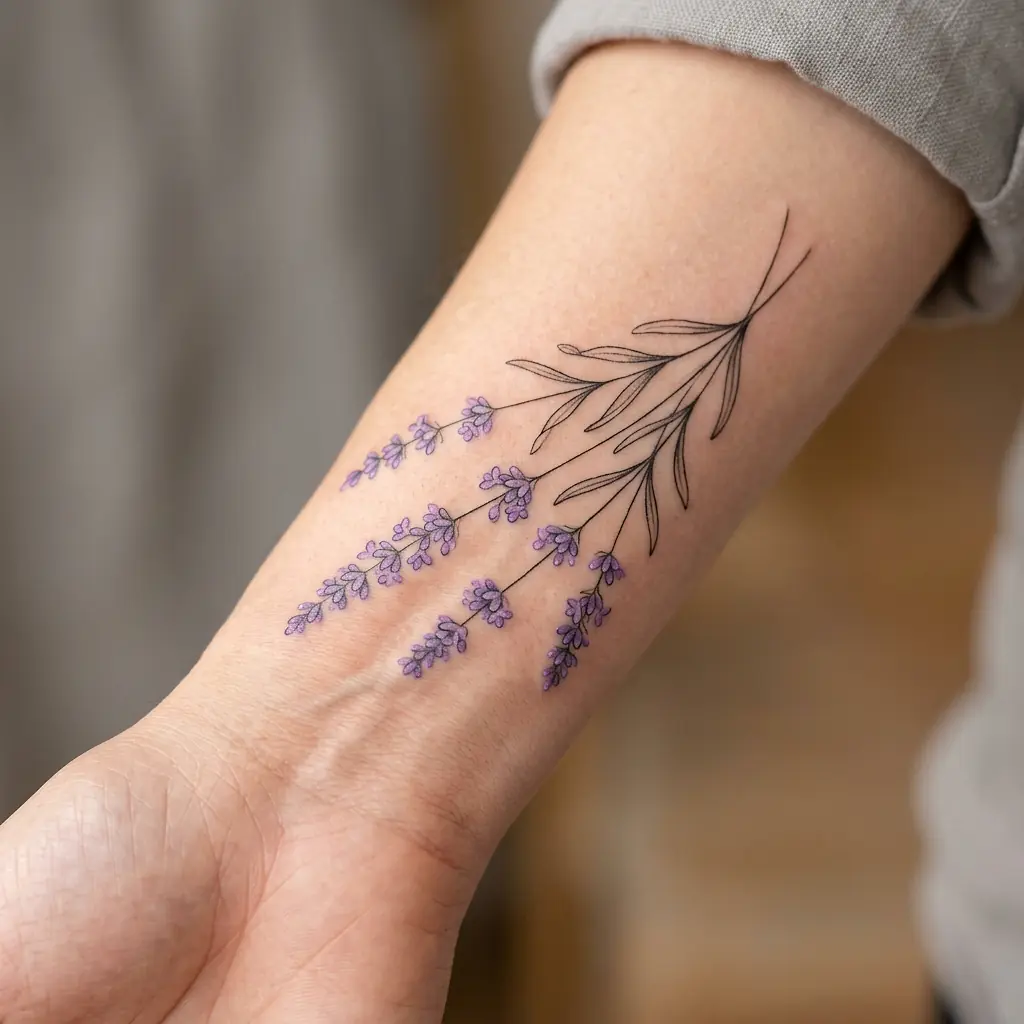
Fine line is the most sought-after style for lavender tattoos. Delicate strokes trace the thin stems and small clustered flowers, creating an airy, refined motif that captures the plant’s essential character.
Watercolor elevates lavender with shades of purple, mauve, and blue that diffuse softly, evoking Provencal fields seen through morning mist. The dreamy, unfocused edges complement the flower’s gentle nature.
Botanical illustration, inspired by herbalist reference plates, offers a precise, scientific rendering of the plant, appreciated by nature enthusiasts. Illustrative style adds an artistic interpretation while maintaining recognizability.
Minimalist designs reduce lavender to a few essential strokes, often a single sprig with small touches of purple. Black and grey offers a timeless, understated version that works beautifully in small formats.
Recommended Placements
The wrist is the most popular placement for a lavender sprig, discreet and elegant, visible daily as a reminder of serenity. The forearm allows a more developed composition with multiple stems.
The ankle hosts a small lavender bouquet with charm and femininity. The ribs offer a placement along the side for an elongated stem that follows the body’s curves.
The back of the arm and the nape of the neck are refined choices, revealed with movement. The back, along the spine, allows a botanical composition incorporating several varieties of aromatic plants.
The collarbone and behind the ear suit minimalist lavender sprigs, discreet yet deeply meaningful.
Combinations and Associations
Lavender combines naturally with other aromatic herbs like rosemary, sage, and thyme, creating an herbal bouquet rich in healing and protection symbolism.
Paired with a moon, lavender reinforces its spiritual and intuitive dimension. Bees visiting lavender sprigs evoke the sweetness of life and nature’s harmonious work.
A butterfly resting on lavender creates a graceful pastoral scene symbolizing transformation and freedom. Crystals or stars add an esoteric, mystical dimension.
Ribbons tied around a lavender bouquet add a romantic, personal touch, while calligraphed words complete the design with intimate meaning.