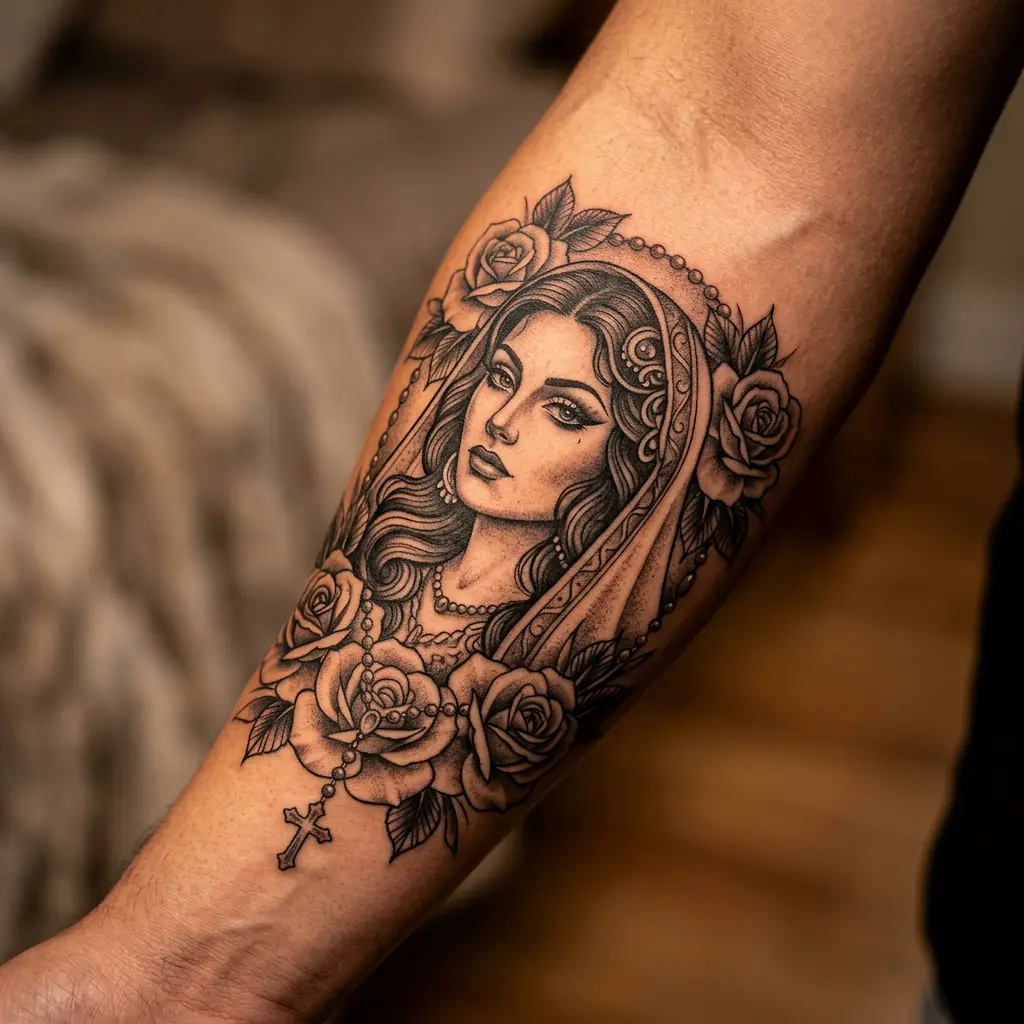
Meaning of the Chicano Tattoo
The Chicano tattoo was born in the streets and prisons of the American Southwest, carried by the Mexican-American community as an act of cultural pride, faith and resistance. This unique style, recognizable by its remarkably fine black and grey gradients, has become one of the most influential tattoo traditions in the world.
Chicano tattooing is above all a life narrative. Each piece tells a story: the faith that sustained its wearer through difficult times, the loved ones who accompanied them, the trials they endured and the values that define them.
The Virgin of Guadalupe is the most iconic motif. Patron saint of Mexico, she represents maternal protection, unwavering faith and the connection to Mexican roots. Her image, said to have appeared to an indigenous man in 1531, also symbolizes the fusion of pre-Columbian and Catholic cultures.
Female portraits hold a central place in Chicano style. The Catrina (elegant Day of the Dead skeleton), clown girls (painted faces), portraits of mothers, wives or daughters: women are celebrated as sources of beauty, strength and devotion.
Chicano lettering, calligraphed in a distinctive gothic style, inscribes names, dates, places or life maxims. Words carry as much weight as images, and typography is an art form in itself within this tradition.
Praying hands symbolize faith and the connection with God. The rosary wrapped around tattoo elements recalls daily devotion. The cross represents sacrifice and redemption.
Origins and History
Chicano tattooing was born in the 1940s-1950s in the Mexican-American neighborhoods (barrios) of Los Angeles, El Paso and San Antonio. The first Chicano tattoos were created in prison with rudimentary means: sewing needles, pen ink and tape recorder motors converted into handmade tattoo machines.
This prison origin explains the characteristic black and grey style: only black ink was available behind bars. Artists developed an ink dilution technique to create incredibly fine gradients, comparable to wash painting.
The Chicano movement of the 1960s-1970s, which demanded civil rights for Mexican-Americans, gave a political dimension to tattooing. Aztec symbols, portraits of Zapata and Che Guevara, and images of the Virgin of Guadalupe became acts of cultural resistance.
Lowriders (custom cars dropped low to the ground) and murales (barrio wall paintings) share the same aesthetic as Chicano tattooing. These three forms of expression form a coherent cultural ecosystem rooted in community pride.
Popular Styles
Black and grey is the founding style and remains the most emblematic. Subtle gradients, achieved through progressive dilution of black ink, create a striking photographic rendering. The single needle technique allows extreme precision in detail work.
Chicano realism has evolved considerably since its origins. Contemporary artists produce portraits of stunning hyperrealism, with skin textures, light reflections and expressions of remarkable accuracy.
Chicano script is a lettering style in its own right. Gothic letters, adorned with flourishes and shading, transform words into graphic works of art.
Neo-Chicano style integrates color and contemporary elements while respecting the founding codes: portraits, religious symbolism and narrative compositions.
Recommended Placements
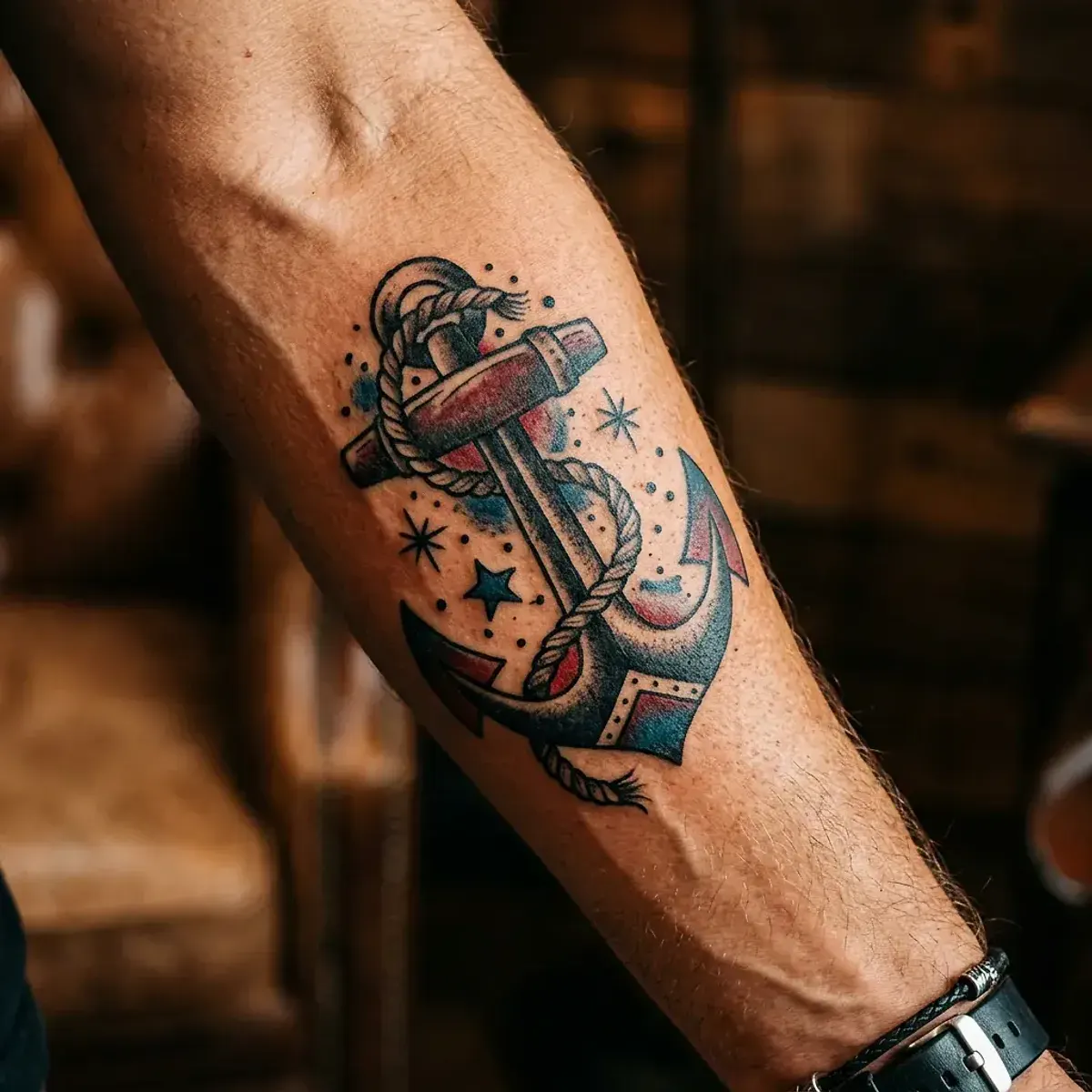
The forearm is the classic Chicano tattoo placement, perfect for portraits, lettering and narrative scenes. The full sleeve allows a complete story to unfold, blending all elements of the style.
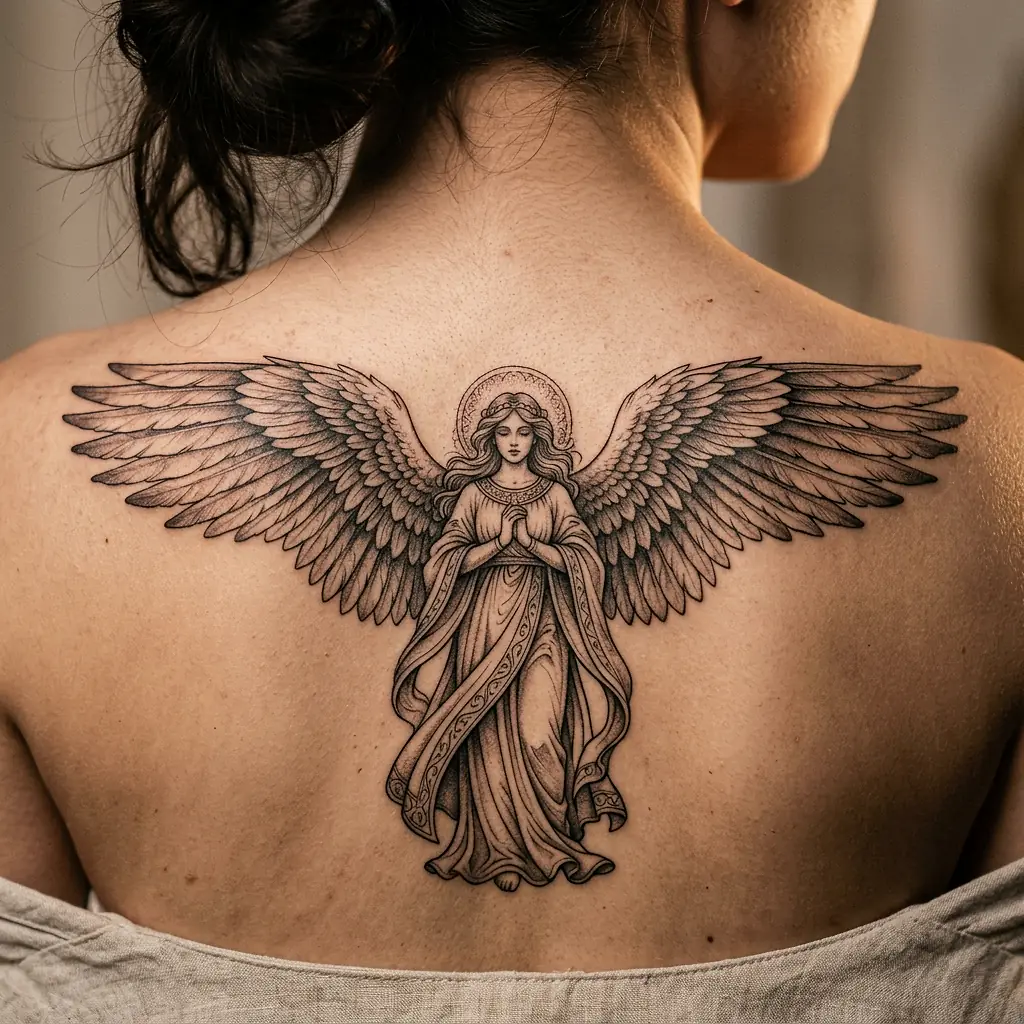
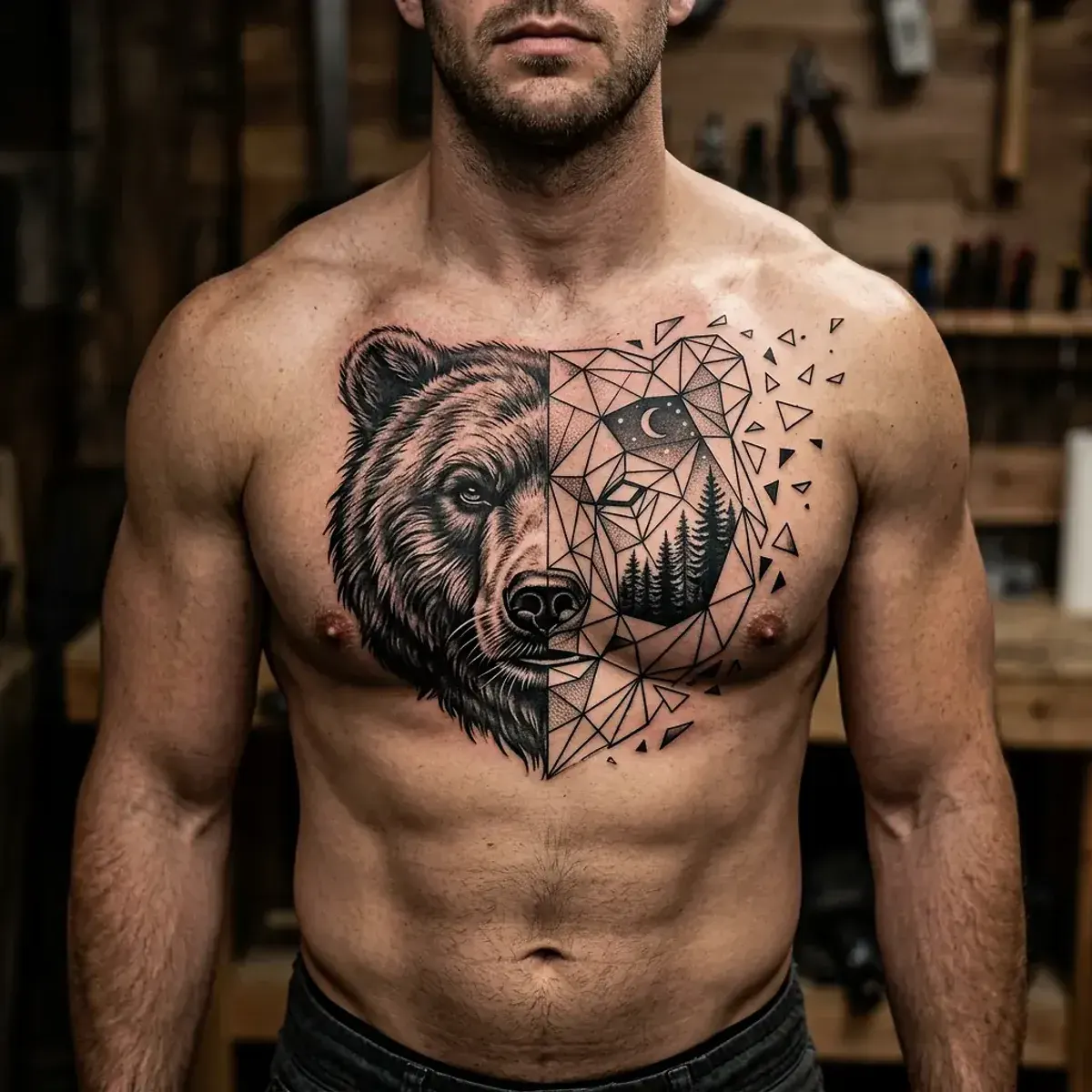
The back accommodates large religious compositions: full-length Virgin of Guadalupe, Christ on the cross, or Last Judgment scenes. The chest suits symmetrical compositions.
Hands, fingers and neck are bold placements typical of Chicano tradition. A Catrina skull on the hand or lettering across the fingers are classics of the genre.
Combinations and Associations
Chicano tattooing is by nature a combinatorial style. A typical composition may blend a Catrina portrait, roses, a rosary, lettering and clouds, all unified by harmonious grey gradients.
Temporal elements (clocks, hourglasses) remind of life’s brevity. Doves symbolize peace and freedom. Dice and playing cards evoke life’s chance and risk-taking.
The association of sacred and profane is a hallmark of the style: a Virgin alongside a pistol, praying hands surrounded by flames, a Catrina wearing a crown of roses. These contrasts reflect the complexity of the Chicano experience.