Meaning of the Octopus Tattoo
The octopus is among the most intelligent and enigmatic creatures in the ocean, and as a tattoo it embodies adaptability, complex intelligence, and the allure of the unknown depths. With three hearts, blue blood, and a brain distributed across each of its eight tentacles, the octopus represents a form of thinking that is simultaneously centralized and decentralized.
Choosing an octopus tattoo celebrates mental flexibility and multitasking. The creature can solve puzzles, open jars, and navigate mazes, all while independently controlling each arm. It speaks to those who manage complexity with grace and who approach problems from multiple angles simultaneously.
The octopus also symbolizes regeneration and resilience. It can regrow a lost tentacle, change its color and texture in a heartbeat, and squeeze through impossibly small spaces. These qualities make it a powerful emblem for people who have rebuilt themselves after loss or who thrive under pressure.
Origins and History
In Norse mythology, the Kraken, a legendary giant octopus, terrorized sailors and swallowed ships whole. This mythical creature represented the untamable power of the ocean and the danger lurking beneath calm waves.
Japanese culture has a long, complex relationship with the octopus (tako). In ukiyo-e woodblock art, the octopus appears as both terrifying and fascinating. Hokusai’s famous prints immortalized the creature in marine compositions that became cornerstones of Japanese tattoo art.
The Minoans of ancient Crete made the octopus a major decorative motif, adorning pottery and palace frescoes with its sinuous form. It symbolized the maritime power of their civilization and their deep connection to the Mediterranean Sea.
Polynesian peoples saw the octopus as a symbol of voyaging and navigation. Its tentacles represented the different directions of the ocean, and navigators considered it a guide for crossing the vast expanses of the Pacific.
Popular Styles
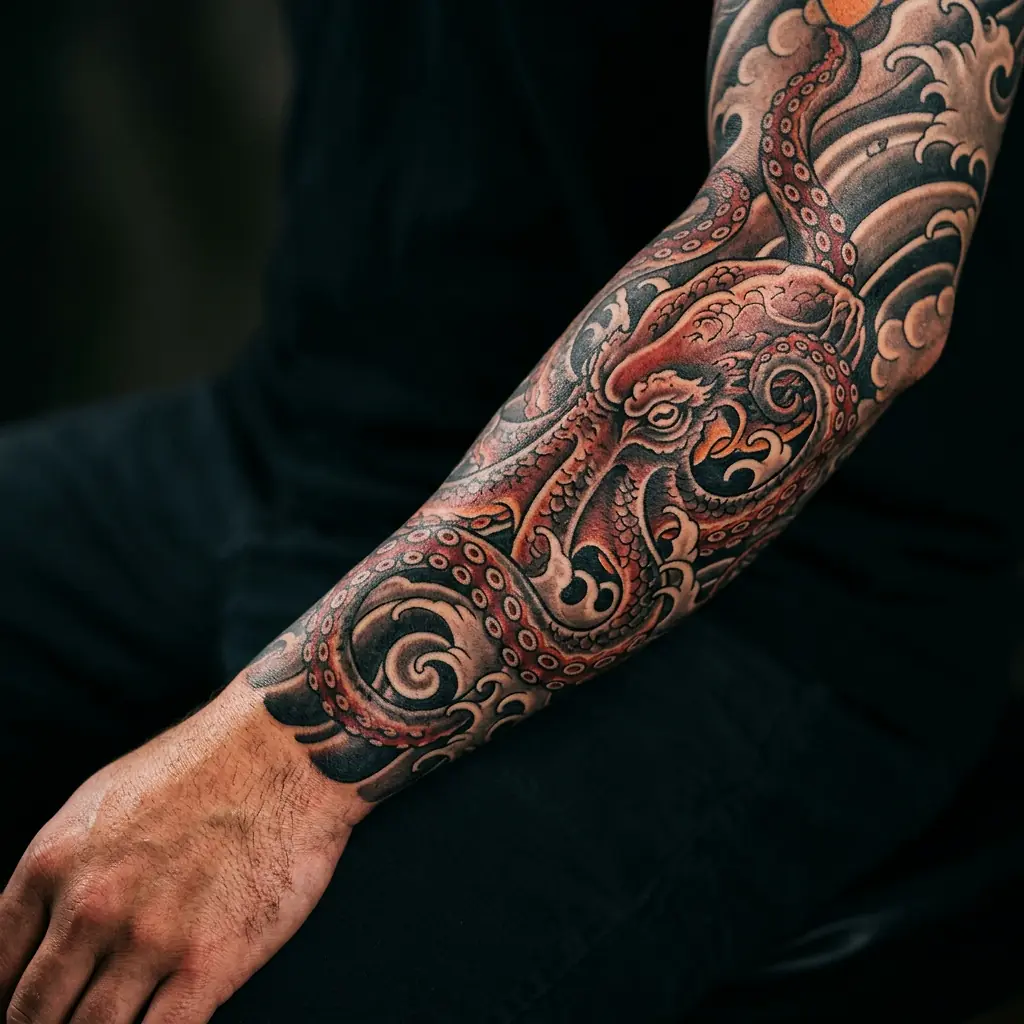
Japanese traditional is an iconic choice. An octopus with undulating tentacles surrounded by waves and cherry blossoms composes a spectacular irezumi piece loaded with cultural symbolism.
Realism captures the fascinating textures of the octopus’s skin, its detailed suckers, and its remarkably expressive eyes. Underwater light effects add an immersive dimension to the design.
Neo-traditional features vibrant colors, bold outlines, and an illustrative touch that highlights the tentacular grace of the animal. Blackwork creates a dramatic contrast, ideal for an octopus with enveloping arms.
Watercolor brings splashes of blue, purple, and turquoise that evoke the marine world, giving the impression the creature is emerging from a cloud of ink.
Recommended Placements
The full sleeve is the premier placement for an octopus. Its tentacles wind naturally around the bicep and forearm, creating an impressive three-dimensional effect. The thigh offers a similar surface, perfect for a detailed composition.
The back allows for a monumental octopus with tentacles extending in all directions, forming a breathtaking dorsal piece. The ribs accommodate a single tentacle or an elongated octopus that follows the curve of the torso.
The shoulder is ideal for an octopus whose tentacles cascade down the arm or across the pectoral. The calf provides a perfect spot for a vertical design where the creature appears to be diving toward the ankle.
Combinations and Associations
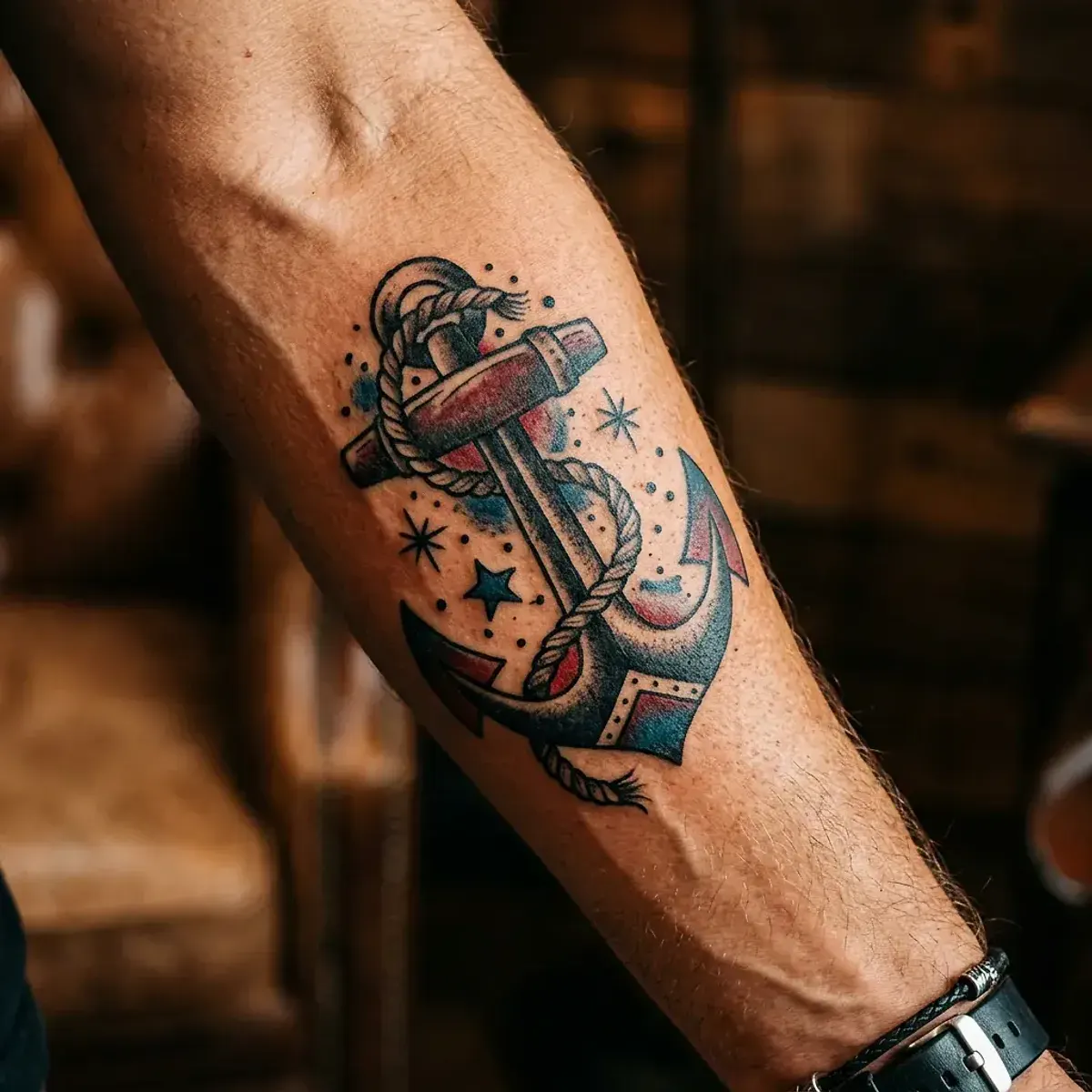
The octopus integrates magnificently into complete maritime scenes: shipwrecks, treasure chests, anchors, and lighthouses create a pirate or ocean adventurer aesthetic. Paired with a skull, it evokes the danger of the deep and the mystery of death.
A tentacle wrapping around a ship is a classic composition that references the Kraken legend. The octopus combined with roses creates a contrast between beauty and danger, a visually striking duality.
Sacred geometry elements integrated into the tentacles add a spiritual dimension, while fractal patterns and spirals emphasize the intelligence and complexity of this extraordinary creature.