Meaning of the Minimalist Tattoo
The minimalist tattoo is the art of saying what matters with the fewest possible strokes. In a world of ever-larger and more detailed tattoos, the minimalist style chooses the path of simplicity, elegance and precision. Every line carries weight, every empty space has its purpose.
Minimalism in tattooing is not merely a graphic style: it is a philosophy. Inspired by the artistic movement of the same name born in the 1960s, it rests on the principle that reduction to essentials reveals the deep truth of a subject.
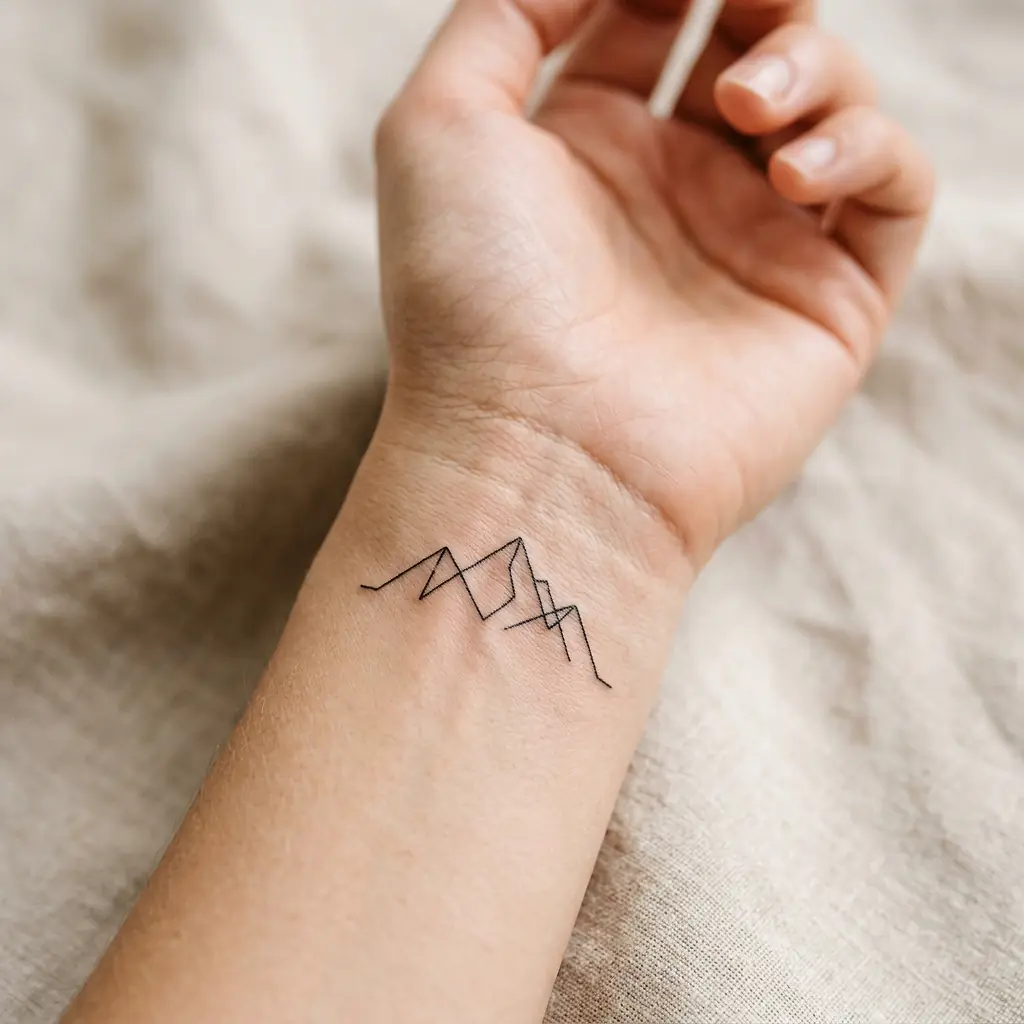
A heart drawn in a single continuous line carries as much emotion as a richly detailed realistic heart. A mountain reduced to three angular strokes evokes nature’s grandeur with the same power as a photorealistic landscape. Minimalism trusts the intelligence of the viewer’s eye.
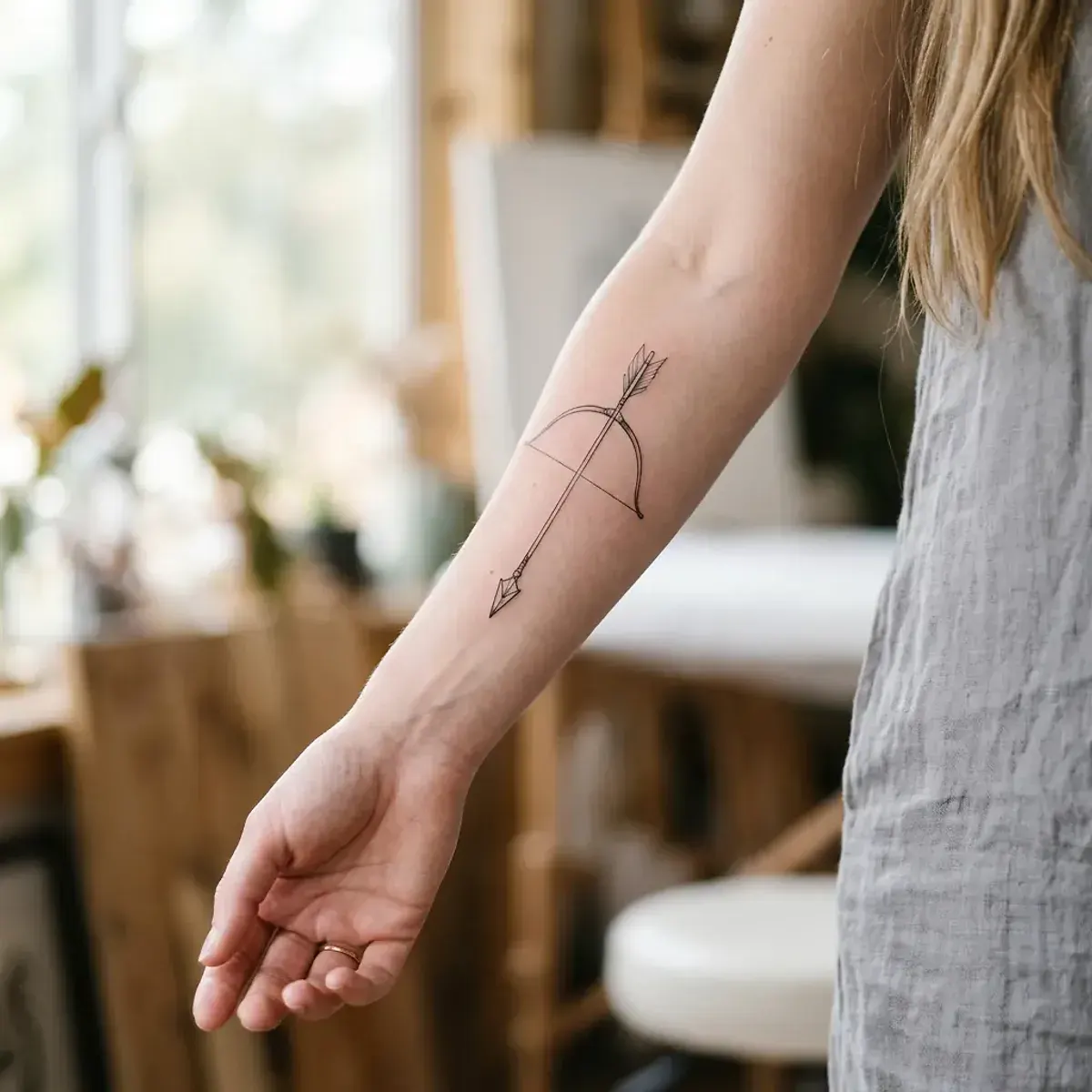
The most popular subjects in minimalist tattooing are universal symbols: hearts, stars, moons, arrows, infinity symbols, triangles, circles. Their visual simplicity allows immediate reading while preserving symbolic depth.
Botanical representations (leaves, flowers, branches) reduced to their simplest outline have become a genre classic. Minimalism also excels in one-line animal portraits, where the entire animal is traced without ever lifting the needle.
Minimalist lettering, in fine and elegant typefaces, inscribes meaningful words, dates or geographic coordinates with a discretion that makes them intimate.
Origins and History
Minimalist tattooing draws its roots from the minimalist art movement of the 1960s, led by artists like Donald Judd, Dan Flavin and Agnes Martin. The founding principle: reduce the work to its essential elements to reveal formal purity.
In tattooing, the minimalist style began emerging in the 2000s, driven by the rise of social media that spotlighted artists specializing in fine lines and small motifs. Instagram in particular catalyzed this trend by offering the perfect showcase for photogenic, graphic tattoos.
South Korea played a major role in the rise of minimalist tattooing. Korean artists, often operating within a restrictive legal context, developed an ultra-fine and delicate style that conquered the world. Their approach, influenced by the Asian aesthetic of emptiness and sobriety, redefined fineness standards in tattooing.
The influence of Scandinavian design, with its “less is more” philosophy and clean aesthetic, also nourished this trend.
Variations Within the Style
Fine line is the technical foundation of minimalism. Lines are drawn with very fine needles (often 1RL or 3RL) for a delicate, airy rendering. This style demands an extremely steady hand and impeccable technical mastery.
Micro-realism pushes the technical challenge by reproducing realistic subjects (faces, animals, landscapes) in miniature dimensions. Details are stunningly precise despite a size of just a few centimeters.
One-line art represents an entire subject with a single continuous stroke. The challenge is capturing the essence of the subject without ever lifting the needle. When successful, the results have remarkable fluidity and elegance.
Geometric minimalism uses pure shapes (circles, triangles, straight lines) to create abstract compositions or stylized representations of concrete subjects.
Recommended Placements
The wrist is the most popular placement for minimalist tattoos. Visible without being imposing, it suits small symbols and short words perfectly. The ankle offers a similar frame for discreet motifs.
The inner arm and forearm accommodate longer lines and vertical compositions. The finger is a trending placement for ultra-minimalist symbols (rings, small glyphs).
Behind the ear, the collarbone and the sternum are placements that play on delicacy and intimacy. The nape suits a motif hidden by hair but revealed at will.
Combinations and Associations
Minimalist tattoos naturally lend themselves to collecting. Multiple small motifs accumulated over time create a personal visual narrative, each piece marking a moment, a place or a significant person.
Thematic patchworks gather motifs linked by a common thread: astronomy (moon, stars, constellations), botany (flowers, leaves, branches), geometry (pure shapes, lines) or travel (coordinates, planes, mountains).
Couple and friendship minimalist tattoos are very popular: complementary or identical motifs, small and discreet, creating a silent bond between two people.