Meaning of the Lizard Tattoo
The lizard is an ancient symbol of regeneration, adaptability, and quiet survival. This unassuming creature possesses extraordinary abilities that have earned it a place in mythologies and spiritual traditions around the globe. As a tattoo, the lizard carries layers of meaning that resonate with anyone who has rebuilt themselves after loss.
The lizard’s most iconic trait is its ability to shed its tail when threatened and regrow it entirely. This biological miracle makes it a potent emblem of renewal, of leaving behind what no longer serves you in order to move forward. A lizard tattoo declares that you can lose a part of yourself and still become whole again.
The lizard also represents patience and keen observation. It will remain motionless for extended periods, scanning its environment with methodical precision before striking with lightning speed. This quality speaks to those who understand the power of timing, of waiting for exactly the right moment to act.
Origins and History
In Polynesia, the gecko (mo’o) is a sacred being, a messenger of the gods and a household protector. Lizard motifs in traditional Polynesian tattooing represent communication with the spirit world and protection against malevolent forces. A gecko tattoo functions as a talisman of good fortune.
In Aboriginal Australian culture, the goanna plays a central role in Dreamtime narratives. It is regarded as a creator of the landscape and a guardian of ancestral knowledge. Rock art depicting lizards dates back tens of thousands of years.
The Romans associated the lizard with sleep and death because it hibernates through winter and appears to be reborn in spring. This annual resurrection made it a symbol of life after death and cyclical renewal.
In Native American traditions, the lizard was linked to dreams and vision. Shamans used the lizard image to access prophetic visions. The horned lizard was particularly sacred to peoples of the American Southwest.
Popular Styles
Polynesian tribal is one of the most authentic styles for a lizard tattoo. Traditional geometric patterns, spirals, and bold lines create a stylized gecko loaded with cultural symbolism.
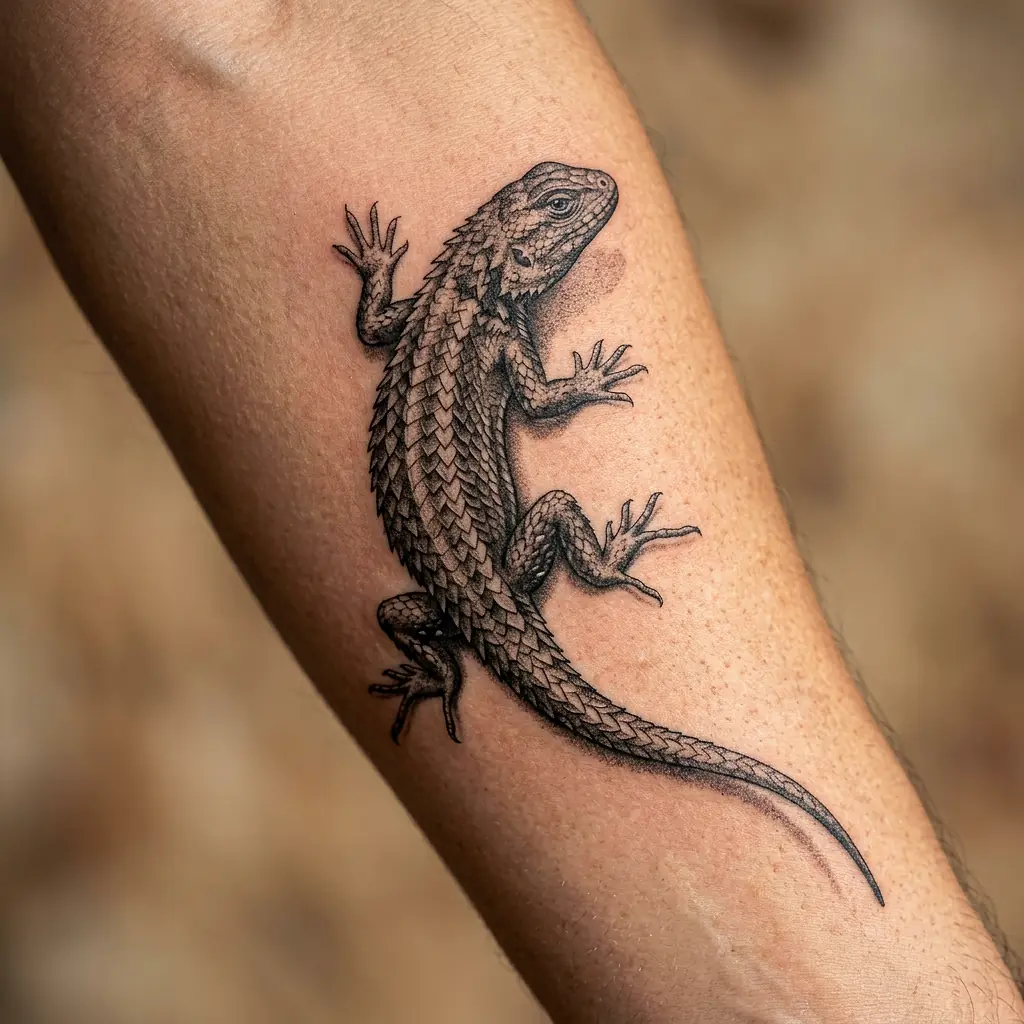
Realism captures detailed scales, the vivid colors of tropical geckos, or the textured skin of Mediterranean wall lizards. A realistic chameleon with shifting colors presents a technical challenge that produces spectacular results.
Minimalist fine-line offers a sleek, pared-down lizard, often drawn in a single continuous line, elegant and discreet. Dotwork creates a textured rendering that evokes the animal’s scales. Geometric style deconstructs the lizard into abstract forms for a contemporary design.
Trompe-l’oeil is a playful approach: a lizard that appears to be crawling across the skin, complete with realistic cast shadows, creates a surprising visual effect.
Recommended Placements
The wrist and ankle are classic placements for a small lizard that appears to be scurrying along the limb. The creature’s elongated form follows the body’s lines naturally. The shoulder blade accommodates a gecko with legs splayed, as though resting on the skin.
The foot offers an original placement where the lizard seems to crawl toward the toes. The hand, between the thumb and index finger, is a bold choice for a small tribal gecko.
Along the arm or calf, an elongated lizard creates a dynamic sense of movement. The back allows for a monumental lizard seen from above, legs spread wide, in an impressive Aboriginal or Polynesian design.
Combinations and Associations
The lizard combines naturally with the sun, its vital element. A gecko basking on a stone under a sun creates a peaceful naturalistic scene. Tribal motifs add cultural and spiritual dimensions.
Paired with tropical flowers such as hibiscus or plumeria, the lizard conjures the islands of the Pacific. A lizard combined with leaves and moss creates an intimate woodland tableau.
A gecko on a stone wall in trompe-l’oeil or climbing a branch adds a playful, realistic touch. Paired with other desert creatures like a scorpion or snake, the lizard composes a wild, arid landscape.