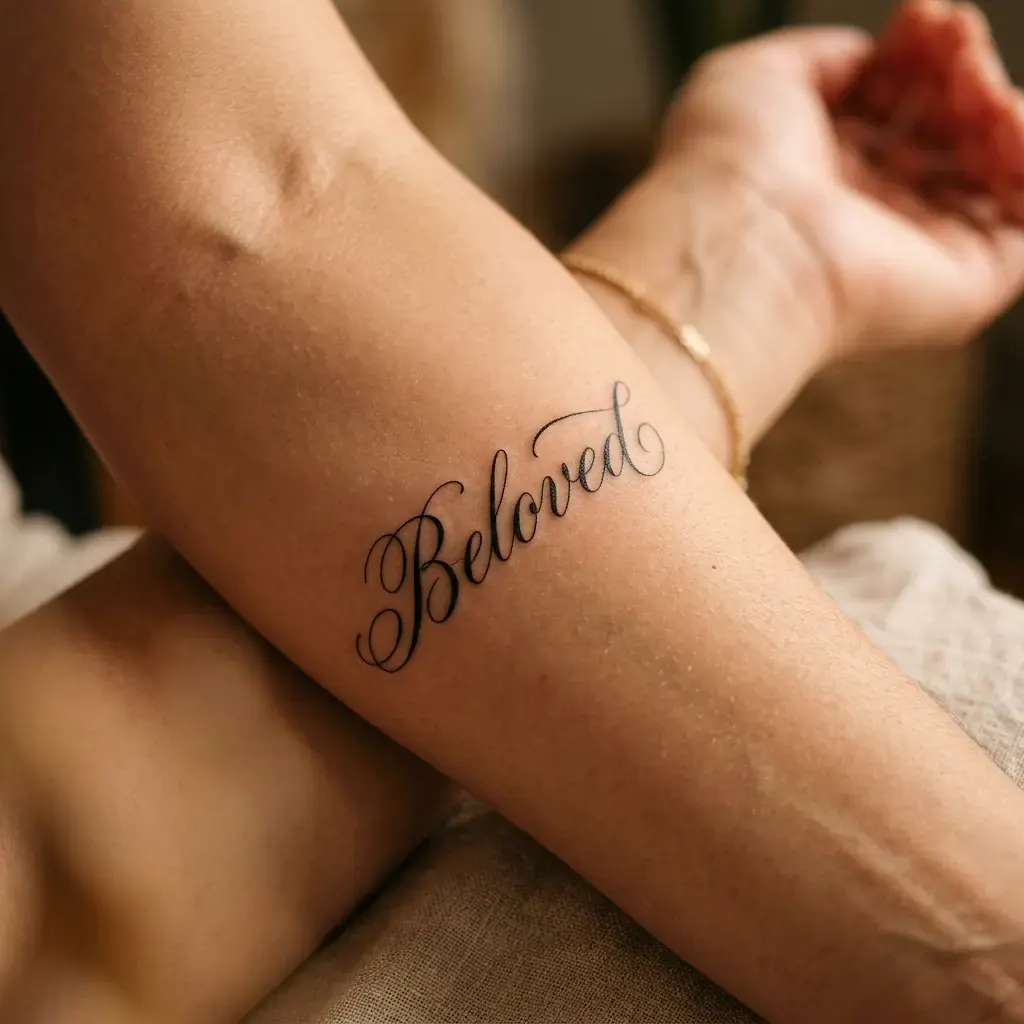
Meaning of the Lettering Tattoo
The lettering tattoo transforms words into body art. It is one of the most personal forms of tattooing, where message, typographic style, and placement unite to create a permanent reminder of a value, a memory, or a commitment.
Lettering is unique in the tattoo world because its meaning is explicit. Where a symbol can be interpreted in multiple ways, a tattooed word says exactly what it means. This clarity makes it a powerful choice for those who want to affirm a message without ambiguity.
A lettering tattoo embodies permanent commitment. Inscribing a word or phrase on your skin is a lifetime pledge to that message. This permanence transforms lettering into a silent oath, a pact between the wearer and their deepest convictions.
Names represent the strongest bonds: a child, a partner, a lost parent, a friend. Lettering becomes a living tribute, an indelible link to a person who matters or who mattered profoundly.
Quotes and mantras serve as inner guides. A phrase that resonated deeply, a line of poetry, a personal motto: these tattooed words become a daily compass, always visible, always present.
Dates mark pivotal moments: a birth, a recovery, a new beginning. They anchor time in the skin, transforming a fleeting instant into a permanent memory.
Origins and History
The tattooing of letters and words is as old as writing itself. The Egyptians inscribed protective hieroglyphs on skin, combining visual art with the power of words.
In medieval Europe, pilgrims had prayers and Christian symbols tattooed in Jerusalem, a tradition that continues to this day. These tattoos were both pilgrimage souvenirs and protective talismans.
Chicano style, born in the Latino communities of Los Angeles in the 1940s and 1950s, elevated lettering to a major tattoo art form. Gothic typefaces and elaborate scripts became a powerful cultural signature.
The Japanese tradition of kanji tattooing (Chinese characters) brings an additional dimension to lettering: a single character can condense an entire concept like “strength,” “courage,” or “love.”
In Arabic cultures, calligraphy is considered the highest form of art. Calligraphed Quranic verses are spiritual tattoos that combine visual beauty with religious depth.
Sanskrit lettering has become increasingly popular in Western tattooing, with words like “om,” “dharma,” and “karma” chosen for their spiritual resonance and the visual elegance of the Devanagari script.
Popular Styles
Cursive script is the most elegant style for quotes and phrases. Connected letters create a continuous, harmonious flow, with thick and thin strokes that add sophistication.
Gothic (blackletter) suits powerful, solemn words. Its angular, ornate letters carry a gravity that amplifies the message. This is the signature style of chicano tattooing.
Minimalist sans-serif offers clean, modern, highly readable typography. This style is particularly well-suited to short words and dates.
Serif typography brings timeless classicism, with fine serifs that evoke traditional printing. Brush script imitates brushwork for expressive, lively lettering.
Typewriter style creates a retro, literary effect perfect for author quotes. Oriental calligraphy offers spiritual and artistic lettering for Asian characters.
Recommended Placements
The forearm is the premier placement for lettering. The flat, elongated surface perfectly accommodates a phrase or word, readable and visible in daily life.
The wrist suits a short word or date, discreet but always accessible to the eye. The collarbone offers an elegant horizontal axis for a single-line phrase.
The ribs accommodate long quotes that follow the body’s curve. The back allows for large-scale typography, impressive and monumental.
Fingers for very short words (one word per finger) and the sternum for symmetrical lettering between the pectorals are trending placements.
Combinations and Associations
Lettering combined with flowers creates a delicate contrast between the rigor of text and the softness of petals. Roses or peonies winding around letters soften the message beautifully.
Adding an arrow or an infinity symbol extends the text’s meaning with an additional symbolic dimension. A crown above the lettering brings nobility and importance to the message.
Calligraphic ornaments, flourishes, and decorative frames transform lettering into a standalone decorative work of art. Adding dates or coordinates anchors the message in a concrete context.
A portrait accompanied by a name or date creates a complete, moving tribute. Birds or butterflies around the text add a dimension of lightness and freedom.