Meaning of the Dolphin Tattoo
The dolphin tattoo is a luminous symbol of joy, intelligence, and connection. A marine creature of incomparable grace, the dolphin embodies harmony with the elements and the ability to navigate life’s currents with lightness and purpose.
The dolphin symbolizes the joy of living and play. Observed in the wild, dolphins leap, surf on waves, and play with their companions. They remind us of the importance of lightness, pleasure, and laughter in everyday existence.
The intelligence of the dolphin is exceptional. Its brain, larger than a human’s relative to body size, enables complex social behaviors, elaborate communication, and remarkable empathy. The dolphin represents intuitive wisdom and emotional intelligence.
The dolphin embodies connection and community. It lives in tightly bonded social groups, protects weaker members, and communicates through a sophisticated system of sounds. This tattoo symbolizes the importance of emotional bonds and mutual support.
The freedom of the dolphin, which roams the oceans without borders, represents the absence of constraints and fluidity. It moves with a grace that transforms effort into elegance and makes the difficult look effortless.
Origins and History
In ancient Greece, the dolphin was sacred. Apollo took the form of a dolphin to guide Cretan sailors to Delphi (whose very name derives from “delphis,” the Greek word for dolphin). The Greeks considered killing a dolphin to be a sacrilege equivalent to the murder of a human being.
The myth of Arion tells the story of a poet saved from drowning by a dolphin charmed by his music. This tale cemented the dolphin as a symbol of rescue and protection of the innocent throughout Mediterranean culture.
In Minoan civilization (Crete), dolphins adorned the frescoes of the palace of Knossos, testifying to this maritime civilization’s deep fascination with these creatures. They symbolized joy, prosperity, and the sacred bond with the sea.
Among the Maori of New Zealand, the dolphin is a kaitiaki (guardian) who guides travelers through dangerous waters. In Polynesian culture broadly, it is a protector of navigators and a symbol of luck at sea.
In the Celtic tradition, the dolphin was associated with sacred water, healing, and rebirth. The Celts believed dolphins were guardians of freshwater springs that connected the visible world to the spirit realm.
Popular Styles
Realism captures the grace of a dolphin in motion, the reflections of light on its smooth skin, and the sparkle of its eye. Color realism reproduces the subtle grey, blue, and white tones of the dolphin with remarkable accuracy.
Watercolor is a natural style for the dolphin, with marine colors (ocean blue, turquoise, violet) merging and diffusing like water around the animal’s body.
Polynesian style integrates the dolphin into traditional tribal patterns, with spirals and geometric motifs representing the ocean and navigation. Minimalist fine-line work captures the essence of the dolphin in a few elegant curves.
Geometric offers a modern dolphin in abstract shapes. Dotwork creates subtle textures and delicate gradients through careful stippling.
Recommended Placements
The ankle and wrist are classic placements for a small dolphin, simple and elegant. The foot accommodates a miniature dolphin for a discreet maritime motif.
The shoulder and shoulder blade suit a dolphin in motion accompanied by waves. The side (ribs) allows for a vertical composition with a dolphin diving into the depths.
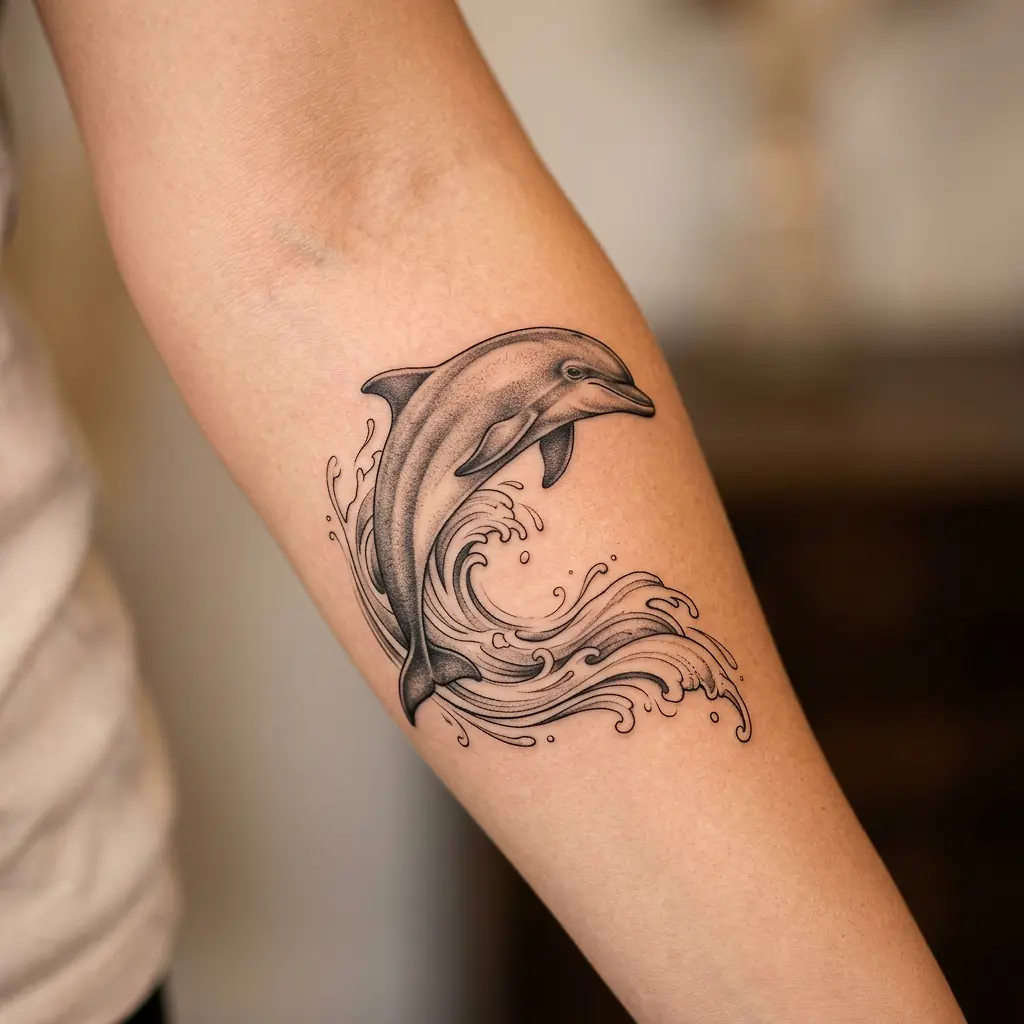
The back offers space for a complete marine scene. The forearm is ideal for a dolphin leaping out of the water. The calf accommodates a vertical dolphin in mid-jump.
Combinations and Associations
A dolphin with waves is the most natural combination, creating a dynamic marine scene. A dolphin leaping above the waves beneath a sunset is a warm and joyful composition.
Two dolphins forming a circle symbolize harmony, balance, and the yin-yang of the ocean. With a turtle, the dolphin creates a duo of oceanic wisdom that represents the patient and playful sides of marine life.
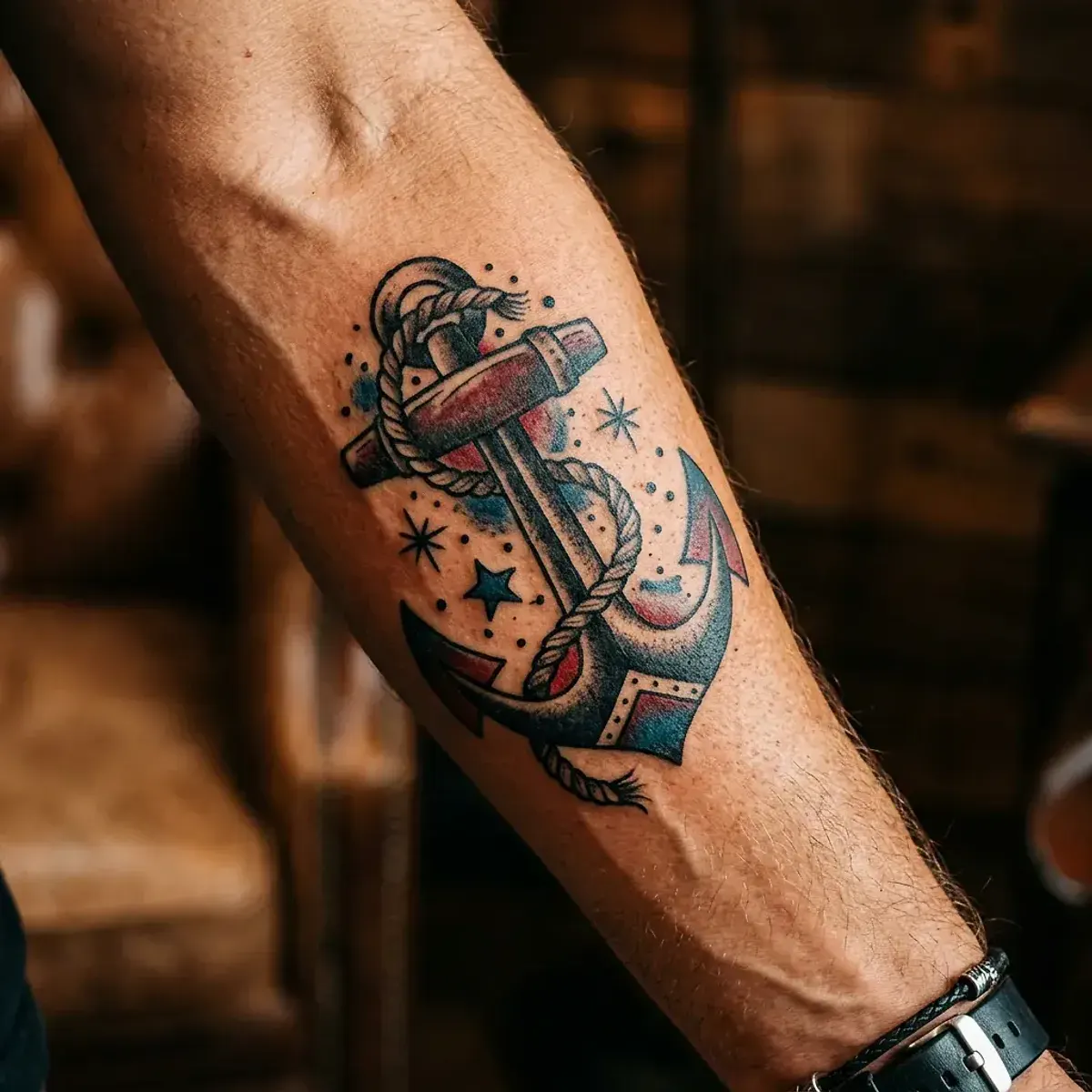
Shells, starfish, and coral enrich the marine scene. A trident or anchor adds a nautical dimension. Bubbles and underwater light rays create an atmosphere of oceanic depth and wonder.