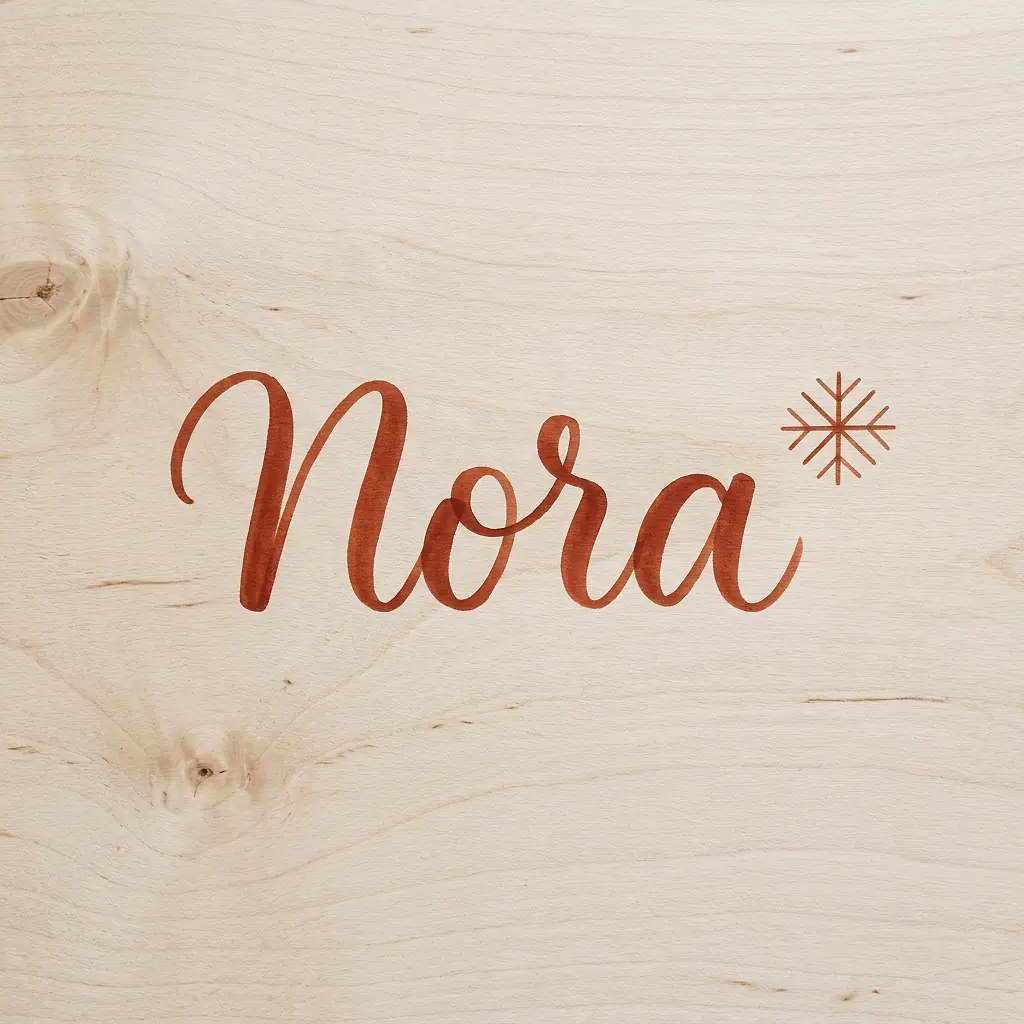
Meaning of the Name Nora
The name Nora shines with a dual meaning that encompasses both moral character and radiant presence. In its Irish origins, Nora is a diminutive of Honora, derived from the Latin word ‘honor,’ making its primary meaning ‘woman of honour’ or simply ‘honour.’ This etymological root connects the name to integrity, dignity, and moral uprightness. A second strand of meaning comes through the Arabic name Noor (or Nur), meaning ‘light’ or ‘radiance,’ which has contributed to Nora’s use across Middle Eastern and North African cultures. These two meanings, honour and light, complement each other beautifully, suggesting a person whose moral character illuminates the space around them. The name’s brevity, just four letters and two syllables, gives it a clarity and directness that mirrors its meaning. There is nothing excessive or ornamental about Nora; it is a name of substance and simplicity.
Origin and History
Nora’s primary origins lie in Ireland, where it developed as a familiar form of Honora or Onora, names that were widely used from the medieval period onward. The Latin Honoria had entered Irish naming traditions through early Christian influence, and Nora emerged as the natural Irish diminutive. For centuries, Nora was one of the most common women’s names in Ireland, carried by countless grandmothers, mothers, and daughters across generations. Irish emigration in the 19th century brought the name to America, where it established itself particularly in communities with strong Irish heritage. The name gained powerful literary resonance through Henrik Ibsen’s 1879 play ‘A Doll’s House,’ in which Nora Helmer’s decision to leave her husband shocked audiences and became a landmark moment in the history of women’s rights in literature. This association with independence and self-determination added new dimensions to the name’s identity. In Scandinavian countries, Nora has its own independent tradition and has become enormously popular. The name’s simplicity, warmth, and cross-cultural accessibility have made it a favourite choice for parents worldwide.
Personality and Character
Individuals named Nora typically embody a distinctive blend of warmth and principled strength. They tend to be genuine, unpretentious people whose kindness is rooted in deep-seated values rather than mere agreeableness. Noras are frequently described as having a natural dignity that commands respect without demanding it. Their moral compass tends to be strong and reliable, guiding them toward fairness and honesty in their dealings with others. This ethical foundation does not make them rigid; rather, Noras often display a flexibility and openness that allows them to listen, learn, and adapt. They are typically empathetic listeners and loyal friends who invest meaningfully in their relationships. Many Noras possess a quiet creative streak, drawn to literature, music, or other art forms that allow for personal expression. Their practical nature ensures that their creativity is grounded and productive. In professional settings, Noras are valued for their reliability, clear communication, and willingness to work collaboratively. Like those named Claire, they project an appealing clarity and directness.
Popularity
Nora’s popularity has followed a classic revival pattern. In the United States, the name was moderately popular in the early 20th century, ranking around the top 100 in the 1900s and 1910s. It declined through the mid-century, bottoming out in the 1970s and 1980s. The resurgence began in the 2000s and has been remarkably strong: Nora re-entered the top 100 around 2015 and has since climbed into the top 30, a position that reflects its broad and growing appeal. In the Netherlands, Nora has been even more successful, reaching the number one position in recent years. Norway, where the Ibsen connection adds particular cultural weight, has also placed Nora at the top of naming charts. Ireland continues to show strong usage, and Germany, Austria, and Spain have all embraced the name. The spelling Norah sees occasional use but remains less popular than the streamlined Nora. The name benefits from the vintage name revival trend while standing on its own considerable merits of brevity, beauty, and meaningful heritage.
Famous Bearers
The name Nora has been carried by women of exceptional talent and influence. Nora Ephron (1941-2012) was one of America’s most beloved filmmakers and writers, whose films ‘When Harry Met Sally,’ ‘Sleepless in Seattle,’ and ‘You’ve Got Mail’ defined the modern romantic comedy genre. Her wit, intelligence, and ability to find humour in everyday life made her a cultural icon. Norah Jones burst onto the music scene with her 2002 debut album ‘Come Away With Me,’ which won eight Grammy Awards and sold over 27 million copies worldwide. Her blend of jazz, country, and pop created a distinctive sound that has influenced a generation of musicians. Nora Roberts is one of the most prolific and commercially successful authors in history, with over 225 romance and suspense novels to her name. In literature, Nora Helmer from Ibsen’s ‘A Doll’s House’ remains one of the most discussed and debated characters in theatre, her final door-slam echoing through the history of feminist thought. Nora Barnacle was the lifelong companion and later wife of James Joyce, whose influence permeated his greatest works. These bearers span entertainment, literature, and music, reflecting the name’s association with creative intelligence and quiet strength.