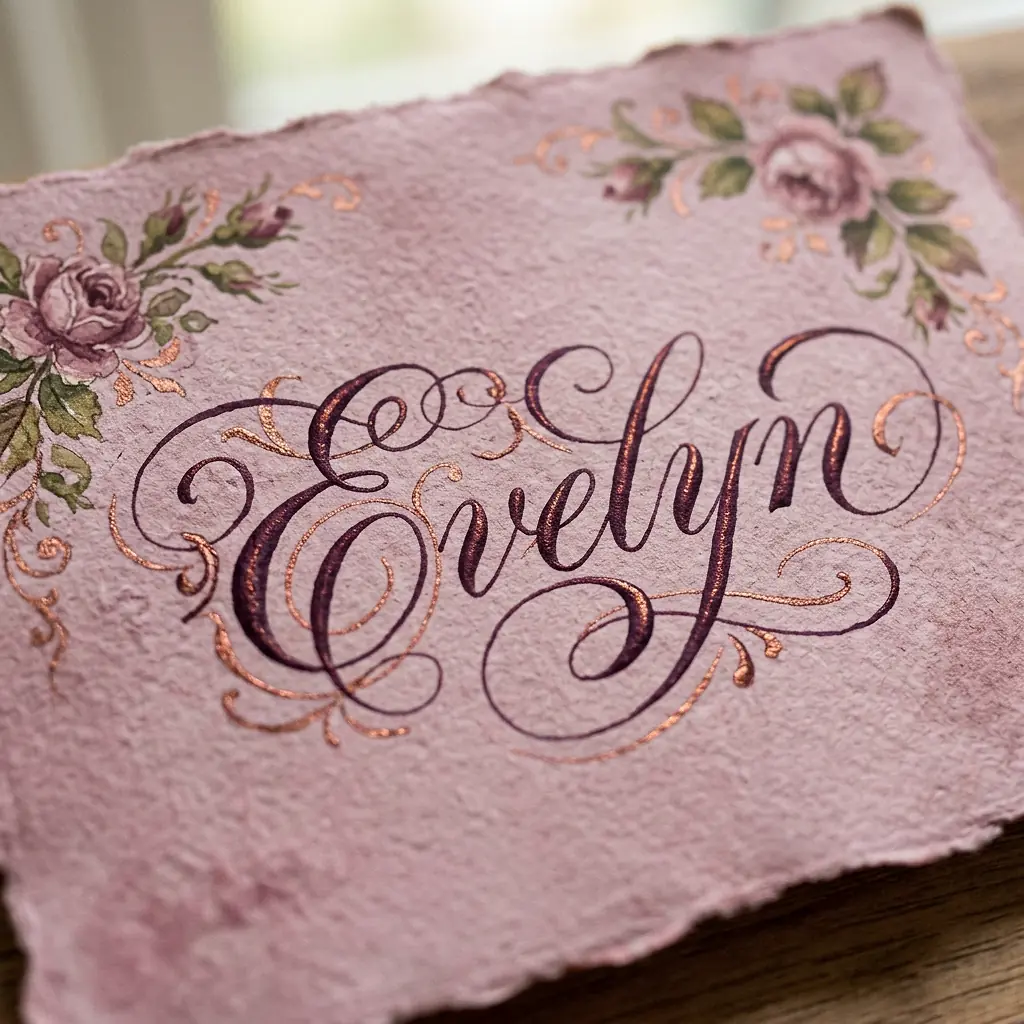
Meaning of the Name Evelyn
The name Evelyn carries a meaning suffused with longing and joy. It is most widely interpreted as meaning ‘wished-for child’ or ‘desired one,’ deriving from the Norman French name Aveline, which traces back to the Germanic element ‘avi,’ signifying desire or wish. This etymology paints Evelyn as a name given to a child who was deeply wanted, a name that celebrates arrival and belonging. An alternative interpretation connects Evelyn to the Old French ‘aveline,’ meaning hazelnut, which in medieval symbolism represented wisdom, protection, and hidden knowledge. The hazelnut connection adds an earthy, natural dimension that complements the more emotional primary meaning. Together, these layers create a name that is at once tender and substantial, suggesting a person who is both cherished and wise. The name’s three syllables flow with an easy elegance that mirrors the grace traditionally associated with its bearers.
Origin and History
Evelyn’s history begins with the Norman conquest of England in 1066. The Normans brought the name Aveline across the English Channel, where it gradually evolved through several forms before settling as Evelyn. Interestingly, for much of its history, Evelyn was a unisex name in England, used for both boys and girls. The masculine usage was particularly notable in the 17th and 18th centuries, as evidenced by the famous diarist John Evelyn. The name Evelyn Waugh, one of the 20th century’s greatest novelists, also demonstrates this tradition, as Waugh was male. By the early 20th century, however, Evelyn had shifted decisively toward feminine usage in America and was becoming rare for boys. It enjoyed strong popularity in the 1910s through 1930s, then gradually declined through the mid-20th century. The name’s current renaissance began around 2000, driven by the broader revival of vintage names that feel both elegant and accessible. Parents today choose Evelyn for its combination of classic refinement and soft, melodic sound.
Personality and Character
Individuals named Evelyn typically embody a distinctive blend of grace and inner strength. They are often perceived as elegant and composed, possessing a natural poise that puts others at ease. Beneath this refined exterior lies a determined spirit; Evelyns rarely back down from their convictions and pursue their goals with a quiet but relentless persistence. They tend to be intellectually curious, drawn to reading, learning, and meaningful conversation. Their emotional intelligence is typically high, allowing them to navigate complex social situations with sensitivity and tact. Many Evelyns are natural caretakers who invest deeply in the wellbeing of those around them, often putting others’ needs alongside their own without losing sight of their personal aspirations. Creatively, they may be drawn to writing, music, or design, where their aesthetic sensibility can find expression. On occasion, their desire for harmony can lead them to avoid necessary confrontations, but their underlying strength usually ensures they address important issues when it truly matters. Like those named Eleanor, Evelyns carry an air of timeless sophistication.
Popularity
Evelyn’s popularity chart resembles a dramatic U-shape. In the United States, the name was highly popular in the early 20th century, peaking at number 10 in 1915. It then entered a long decline, dropping out of the top 100 by the 1950s and reaching its lowest point in the 1980s. The turnaround began in the late 1990s, and Evelyn’s climb back has been swift and decisive. By 2002, it had re-entered the top 100. By 2017, it had reached the top 10, where it has remained since. This revival is part of a broader pattern of vintage names returning to fashion, but Evelyn’s rise has been particularly strong, suggesting it resonates with contemporary parents on multiple levels. In the United Kingdom, the name has followed a similar though less dramatic trajectory. Canada and Australia have also embraced the name’s return. The spelling variant Evalyn sees occasional use, but the traditional Evelyn dominates overwhelmingly. Its three-syllable rhythm and multiple nickname options (Evie, Eve, Lyn) add to its versatility.
Famous Bearers
The name Evelyn has been carried by figures of remarkable achievement and individuality. Evelyn Waugh (1903-1966) stands as one of the finest prose stylists in English literature, with novels like ‘Brideshead Revisited’ and ‘A Handful of Dust’ earning enduring critical acclaim. Notably, Waugh was male, illustrating the name’s historical unisex usage. Evelyn Glennie is a Scottish percussionist of extraordinary talent who has performed worldwide despite being profoundly deaf since childhood, demonstrating that the name’s association with music transcends its literal sound. Evelyn Ashford dominated women’s sprinting in the 1980s, winning four Olympic gold medals and setting world records. Evelyn Hugo, while fictional (from Taylor Jenkins Reid’s bestselling novel), has brought the name to a new generation of readers. In science, Evelyn Boyd Granville was one of the first African American women to earn a PhD in mathematics, breaking barriers in academia. These bearers collectively illustrate the name’s connection to elegance, determination, and intellectual achievement.