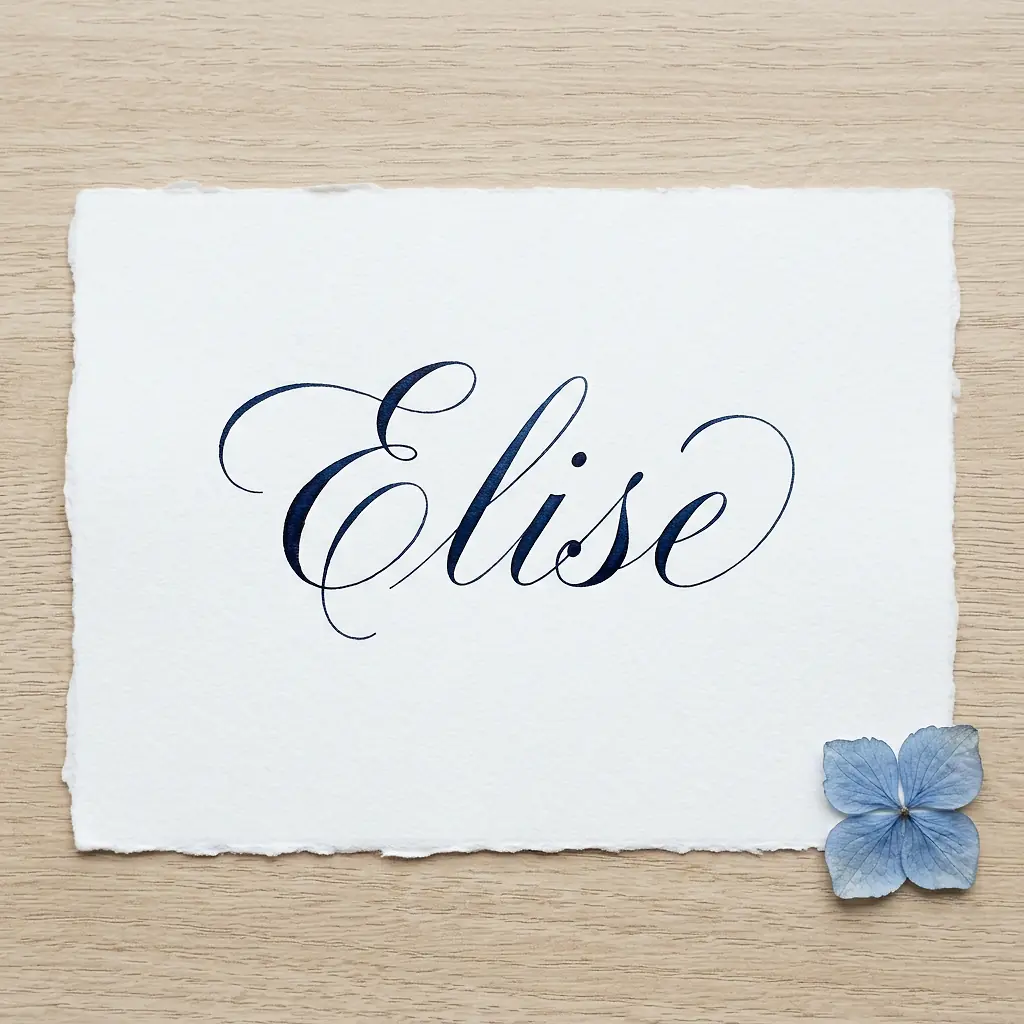
Meaning of the Name Elise
The name Elise carries a meaning of sacred commitment and devotion. As a French shortened form of Elizabeth, it inherits the Hebrew meaning ‘pledged to God’ or ‘God is my oath,’ derived from ‘Elisheva’ (‘El’ meaning God, ‘sheva’ meaning oath or seven, the number of completeness). This spiritual foundation gives Elise a sense of purpose and depth that transcends its delicate sound. The name suggests faithfulness, integrity, and a deep connection to something greater than oneself. What distinguishes Elise from its parent name Elizabeth is the way it distills these grand meanings into a form of refined simplicity. Where Elizabeth is majestic and formal, Elise is elegant and understated. The two syllables carry the same spiritual weight but deliver it with a lightness and grace that have made the name beloved across cultures and centuries, particularly since Beethoven immortalized it in music.
Origin and History
Elise emerged as a French diminutive of Elizabeth, one of the most significant names in Western tradition. Elizabeth traces to the Hebrew Elisheva, the wife of Aaron in the Old Testament and, in the New Testament, the mother of John the Baptist. From this biblical foundation, Elizabeth became one of the most widely used names in European history, spawning dozens of diminutives across languages. Elise became the preferred short form in French-speaking cultures, where it took on an independent identity distinct from its parent name. The defining cultural moment for Elise came in 1810 when Ludwig van Beethoven composed his famous Bagatelle No. 25 in A minor, universally known as ‘Fur Elise’ (For Elise). The identity of Beethoven’s Elise has been debated by scholars for two centuries, with candidates including Therese Malfatti and Elisabeth Rockel, but the mystery only adds to the name’s romantic aura. This single composition transformed Elise from a simple French name into a globally recognized symbol of musical beauty and romantic devotion. The name spread throughout Europe and into English-speaking countries, where it has maintained a consistent, refined presence.
Personality and Character
Individuals named Elise often display a natural elegance and composure that reflects their name’s character. They tend to be refined in their tastes and measured in their approach to life, preferring quality over quantity in relationships, possessions, and experiences. Elises are frequently drawn to the arts, particularly music, where the Beethoven connection seems almost prescient. Their creative sensibility extends beyond formal artistic pursuits to an overall aesthetic awareness that influences how they organize their environments and present themselves. Intellectually, Elises tend to be sharp and articulate, capable of expressing complex ideas with clarity and precision. They value thoughtfulness and may take longer to form opinions, but their conclusions are usually well-reasoned and firmly held. In relationships, Elises are typically devoted and attentive, investing deeply in the people who matter most to them. Their emotional life runs deep, though they may not always display it openly, preferring a composed exterior. This combination of sensitivity and composure gives them a distinctive presence that others find both calming and inspiring, much like those named Grace.
Popularity
Elise occupies an interesting position in the naming landscape: consistently present, widely appreciated, but never overwhelmingly trendy. In the United States, the name has maintained a position between roughly 150 and 250 in the rankings for several decades, representing a stable base of parents who appreciate its refined character. This consistency suggests that Elise appeals to a specific taste for elegance and understatement rather than riding waves of fashion. In France and Belgium, Elise has been considerably more popular, frequently ranking in the top 30 or 40. Scandinavian countries, particularly Norway and Denmark, also show strong affinity for the name. The related forms Elisa, Elissa, and Elyse see occasional use, but the classic French spelling Elise remains dominant. The name benefits from being instantly recognizable (thanks to Beethoven) while remaining uncommon enough to feel distinctive. Parents who choose Elise are typically seeking something beautiful without being ostentatious, meaningful without being heavy, a name that will wear well from childhood through adulthood without ever feeling dated.
Famous Bearers
The most powerful cultural association with the name Elise is, of course, Beethoven’s ‘Fur Elise,’ one of the most recognizable pieces of classical music ever composed. Written around 1810 and published posthumously in 1867, this short piano piece has introduced the name to billions of people worldwide and created an indelible link between Elise and musical beauty. In contemporary culture, Elise Mertens has distinguished herself as one of Belgium’s most successful tennis players, reaching the top 15 in world rankings and winning multiple Grand Slam doubles titles. Elise Neal is a versatile American actress with a career spanning film, television, and theatre. In automotive culture, the Lotus Elise, a lightweight British sports car introduced in 1996, has carried the name into an entirely different realm of beauty and performance. The car was named after Elisa Artioli, granddaughter of the company’s then-chairman. In literature and fiction, characters named Elise appear across genres, typically embodying qualities of intelligence, grace, and quiet determination. The name’s cultural footprint, while perhaps less extensive than that of Elizabeth, is remarkably focused and consistent in its associations with beauty, artistry, and refined character.